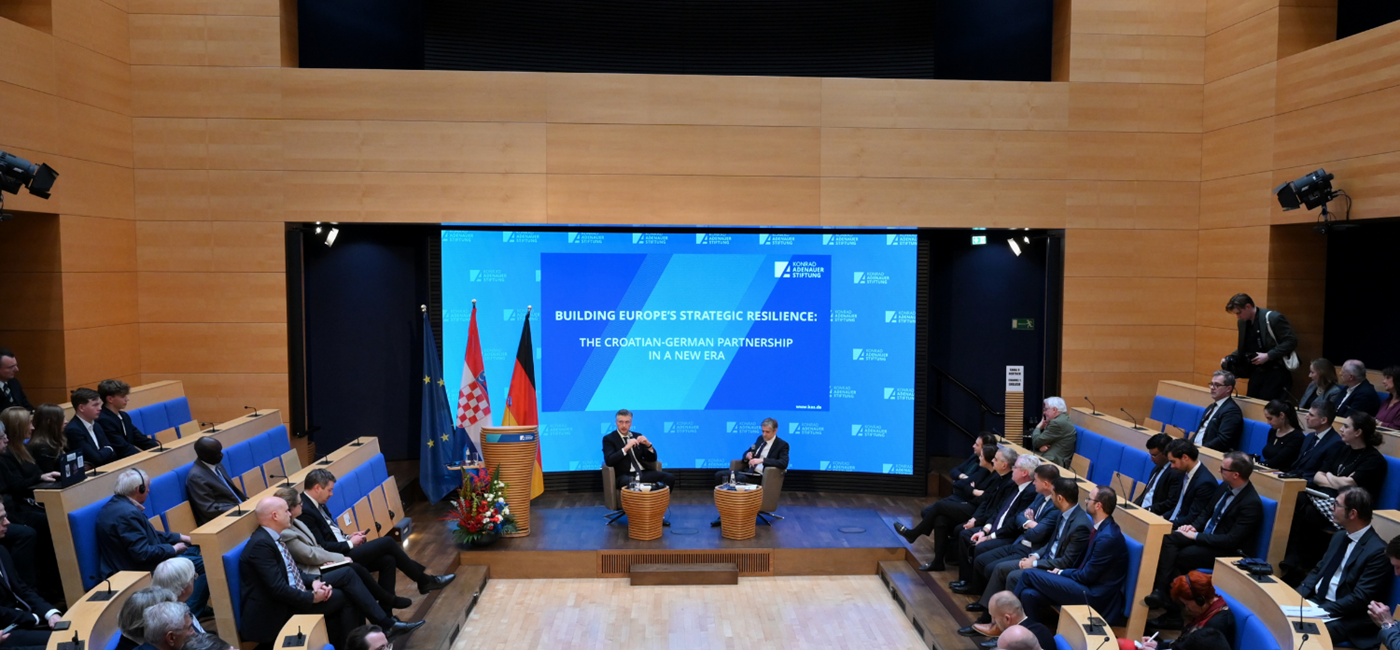
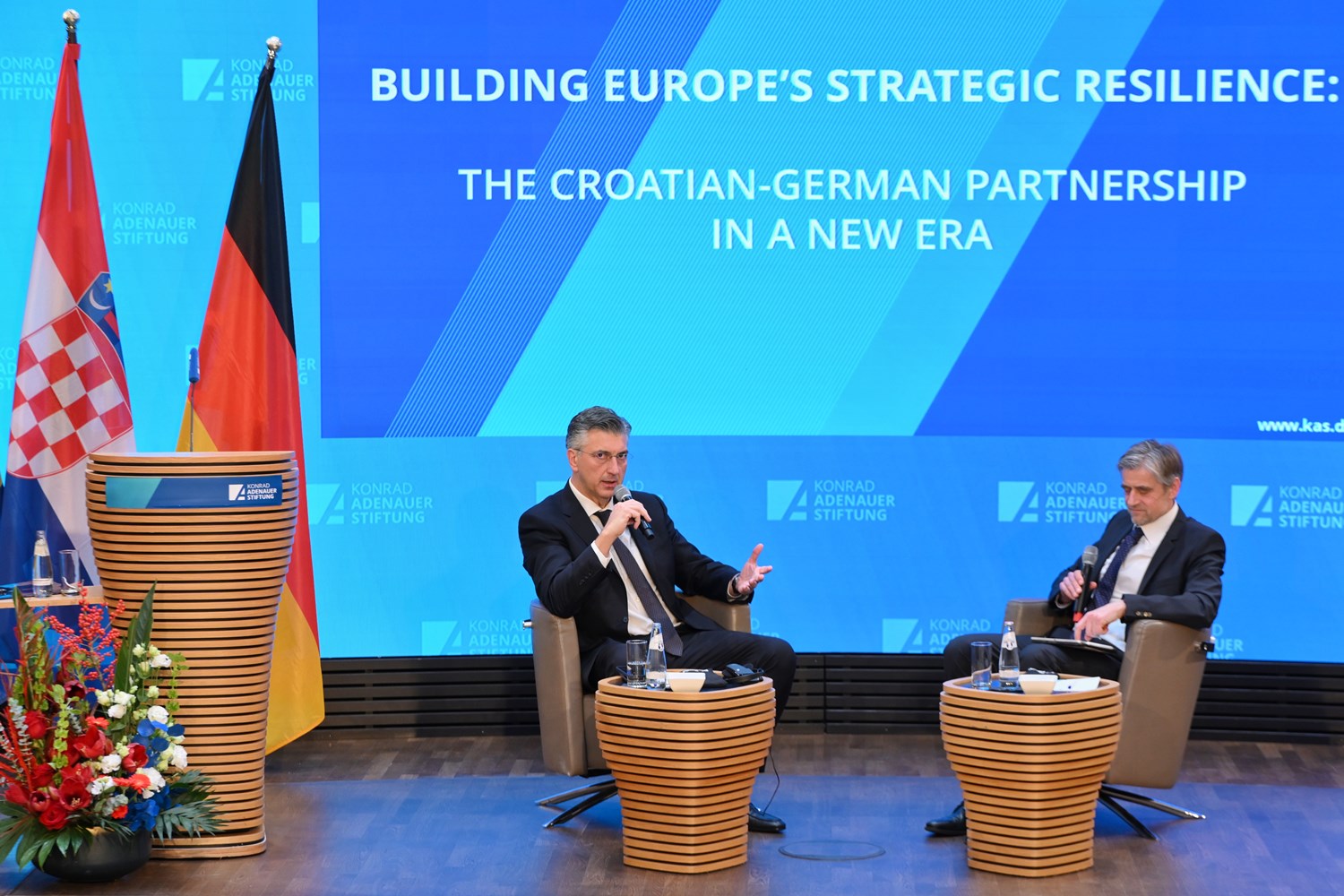
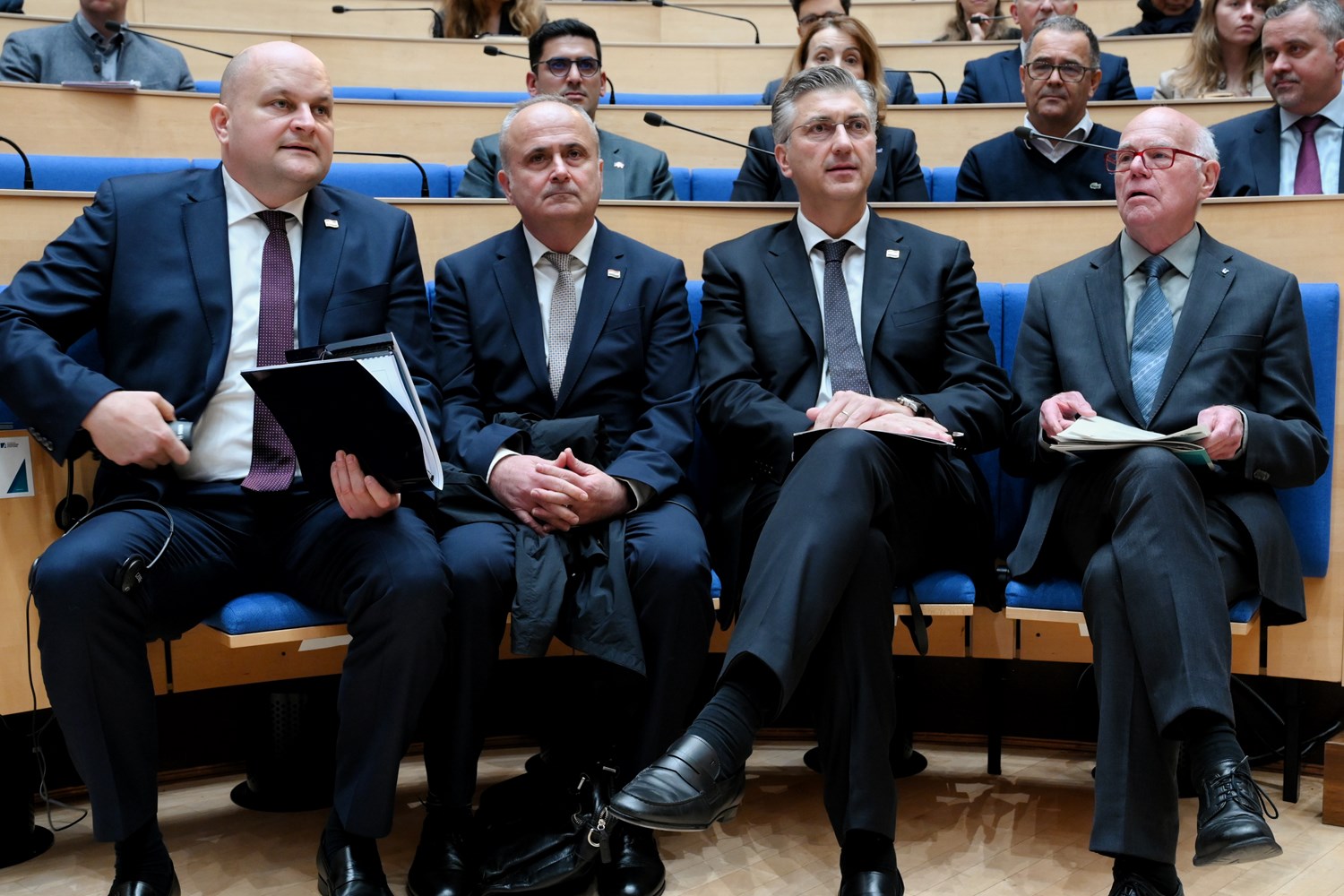
Greeting those present, the Prime Minister expressed his pleasure to be at the Konrad Adenauer Foundation in Berlin today on the occasion of his visit to Germany and meeting with Federal Chancellor Merz.
He stated that today he would speak about the challenges facing the European continent.
Excellent political relations between Croatia and Germany
In this regard, he stressed that his Government has been working for years to deepen the partnership between Croatia and Germany, which is growing in strength and importance in many areas.
He recalled that Germany was crucial during Croatia's struggle for independence, through our processes of accession to the European Union and NATO, and later by entering Schengen and the eurozone.
"Our political relations are excellent, not only at the federal level, but also with the German federal states," said Plenković, and he highlighted the Croatian community in Germany, which numbers almost 500 thousand people, as a special bond between the two countries, emphasizing that they significantly contribute to Croatian and German society.
The Prime Minister also said that Germany is the fourth largest investor in Croatia, adding that last year trade between the two countries reached 9 billion euros. He also said that more than 1,300 German companies operate successfully in Croatia.
We see, he said, further potential for cooperation in energy, security and defense, which, he added, we will confirm tomorrow by signing a contract for the purchase of Leopard tanks.
The decisive moment for Europe is now
"There is no denying it: the decisive moment for Europe is now," the Prime Minister stressed, warning that we live in an era of deep turmoil and uncertainty.
"Many would say that the Zeitgeist is far from favorable. However, my key message is this: if Adenauer and his generation could transform the ruins of war into the foundations of peace and prosperity, our generation must go further," Plenković stressed.
We must, he said, use the current challenges to create a more resilient, united and sovereign Europe, and from the Croatian perspective he outlined several foundations that will shape this joint effort.
Croatia: From a war-torn country to a success story
He recalled that since the devastation of war and aggression in the 1990s, Croatia has undergone a profound metamorphosis, developing into a self-confident, dynamic and resilient nation.
"As the youngest member state of the European Union - and the only one with a recent, real-life experience of an aggression, similar to the Russian attack on Ukraine - Croatia has a unique understanding of the associated risks," Plenković asserted.
He said that our country is today on the threshold of OECD membership, emphasizing that the credit rating has been brought to A level and Croatia has improved its ranking by five places in just seven years. He emphasized that this is the fastest increase in the rating for a European Union member state since the OVID-19 crisis and the energy crisis.
We are now, he said, among the three most dynamic economies in the eurozone in the last four years.
He also said that with more than 20 million visitors, Croatia is among the twenty most popular tourist destinations in the world, adding that this is a ratio that no other Mediterranean country can compare to.
He also stated that our country is seventh in the European Union in terms of the share of renewable energy and eighth in the world in the implementation of the Sustainable Development Goals.
"From this privileged position, gained through sacrifice, renewal and successful European integration, Croatia is addressing the challenges that Europe faces today," said Plenković.
Energy transition: a key factor in Europe's resilience
He named energy as the first topic of his speech today.
"It is the inconspicuous foundation of all our comfort, our industry and our freedom. Everything we consume we transport, mostly by truck or ship, almost always using oil. Without oil there is no transport. Without transport there is no economy," the prime minister argued.
However, he added, the amount of energy available per capita in Europe has been falling for two decades - not because consumption has decreased, but because Europe produces significantly less oil and natural gas than before.
"Our dependence on external suppliers increases our vulnerability," Plenković stressed, saying that Europe imports 95% of its oil, almost 90% of its gas and two-thirds of its coal.
These energy sources are not only CO2-intensive, but also put additional geopolitical pressure on Europe, he added, stressing that the energy transition is therefore not only an ecological imperative, but also a strategic goal. The Prime Minister believes that Europe must build a cleaner, more efficient and far less vulnerable energy system.
In this context, he said that Croatia and Germany support the implementation of the European Green Deal and the Clean Industry Plan.
"The three energy sectors in which we are jointly advancing strategically important projects are: hydrogen, gas and oil pipelines, and geothermal energy," the Prime Minister stated, noting that Croatian gas pipelines are already compatible with hydrogen and will be connected to Hungary, Slovenia, Austria, and Germany.
With the expansion, he emphasized, of the capacity of our LNG terminal to 6.1 billion cubic meters, Croatia is in a position to significantly strengthen Europe's energy security.
He also said that Croatia is also able to meet the oil supply needs of Hungary and Slovakia and that the Adriatic Oil Pipeline (JANAF) is a reliable alternative for both countries.
In this context, he said, we support the European Union's plan to stop importing Russian fossil fuels. Plenković also stated that Croatia remains a stable and reliable partner in the diversification of European energy routes, which he also considered important for Europe's security.
A strong EU security and defence policy as the basis for its strategic autonomy
In his speech, the Prime Minister stressed that Europe is currently facing a security environment that has never been more dangerous since the end of the Cold War, recalling that Putin has launched six major military operations since taking office.
“Everyone here remembers the war in Chechnya, the invasion of Georgia, the annexation of Crimea in violation of international law, the war in Donbas, the intervention in Syria in support of the Assad regime and finally, the major offensive against Ukraine in February 2022,” he argued.
In addition to this open military aggression, he added, Russia is also the initiator of hostile and destabilizing actions across Europe and beyond.
“This reflects a deliberate strategy aimed at undermining the international order and replacing the rule of law with the rule of force,” said Plenković, emphasizing that such a world would allow for the redrawing of borders through aggression, which, he warned, would undermine the security architecture that has prevented major wars in Europe for decades.
Ukraine’s extraordinary resilience, he stressed, is therefore nothing short of heroic.
The Prime Minister recalled that Ukrainians have been resisting a vastly superior aggressor with extraordinary courage for almost four years and that in many respects, they are Europe’s first line of defense.
He also said that Croatia and Germany are strongly committed to increasing pressure on Russia and providing comprehensive support to the defense, sovereignty and territorial integrity of Ukraine.
He emphasized that the current efforts towards a peace agreement must be acceptable to Ukraine and based on strong security guarantees that prevent Russia from repeating its aggression, and that Europe must be included in the current negotiations because, as he said, decisions about the security of our continent cannot be made without us.
He said that Croatia strongly supports Europe's growing responsibility for its own security and its strategic autonomy within the framework of the European Union and NATO, which, he added, enables us to pool resources, avoid duplication of efforts and ensure interoperability.
The Prime Minister also pointed out that Croatia is developing into a global leader in FPV drones produced without critical Chinese components, and that Croatian companies control 80% of the global market for remotely controlled demining machines, saying that this is a key technology for modern conflicts.
He also said that Croatia has tripled its defense budget in the last decade and aims to reach an allocation of 2.5% of GDP by 2027 and 3% by 2030.
Prime Minister said that our Countrx is modernizing its armed forces by fully transitioning to Western technology. He added that Rafale fighters, Black Hawk and Kiowa helicopters, Bradley vehicles, Patria transport aircraft and Bayraktar drones are already in use and that we are in the process of purchasing Leopard tanks, HIMARS systems and CAESAR howitzers.
He announced that investments in the navy will increase.
He said that Croatia has been temporarily allocated 1.7 billion euros in SAFE loans, expressing the expectation that this will cover our country's investment goals in the next two years.
In January next year, he said, we will introduce a mandatory two-month military training program for all 19-year-olds in order to strengthen national defense readiness.
Bilateral defense cooperation with Germany
The Prime Minister said that Croatia considers Germany a leading force in strengthening European defense and an important partner within NATO and the European Union, adding that defense cooperation between Croatia and Germany has significantly intensified in the last two years.
"An important milestone is the aforementioned procurement of Leopard 2A8 main battle tanks, and in addition, there is also the joint investment of DOK-ING-Rheinmetall in the field of unmanned systems," he stated, assessing it as a good example of how European industrial integration contributes to collective resilience.
Europe's competitiveness
Investments in our defense readiness also contribute to European competitiveness, said Plenković.
"In order to maintain and further strengthen this competitiveness, the aforementioned energy transition must be accompanied by a deep industrial transformation. This requires modernized capacities, sustainable investments in research and development, innovation, robust supply chains - including for critical minerals - and strategic investments," he said.
He added that Croatia and Germany can jointly develop robust energy systems, smart grids and innovative platforms and help shape the digital and green transition.
EU Enlargement
The Prime Minister also stressed that completing the European project means further developing a strong, resilient and globally relevant Europe. "Our Union must adapt to new challenges," he said.
In this sense, he said, the enlargement of the European Union remains crucial for the stability, security and prosperity of Europe. It is, he stressed, also the best long-term investment in our peace.
He stressed that the Russian aggression against Ukraine is a stark reminder of why extending stability to our neighbourhood is strategically necessary.
"For Croatia, enlargement is not a theoretical issue - it is a life experience," the Prime Minister stressed, saying that our country is aware of the profound and important transformative power of the European accession process.
Therefore, said Plenković, we support an enlargement process based on merit, the rule of law, respect for European values and the fulfilment of all accession criteria, stressing that the Western Balkans remain a region of strategic interest for Croatia.
He said that the enlargement process, which proceeded very slowly after Croatia's accession, is now, for the first time, in a phase where stronger political will appears - both on the part of the candidate countries and on the part of the European Union. And we must, he added, take advantage of this opportunity.
Europe is once again facing great challenges, and our task is to actively shape the processes that will define our future, said Plenković.
He emphasized that Croatia and Germany stand side by side: in the field of defense and security, in the industrial, energy and digital transition, in their unwavering support for Ukraine, in strengthening the European Union, as well as in the efforts they make to ensure that the Western Balkans remain firmly rooted in common European values.
"By further strengthening our partnership, deepening our cooperation and pooling our resources and capabilities, we are simultaneously strengthening the European Union - a Union that not only overcomes crises but also shapes its own prosperous future", Prime Minister Plenković concluded his speech.
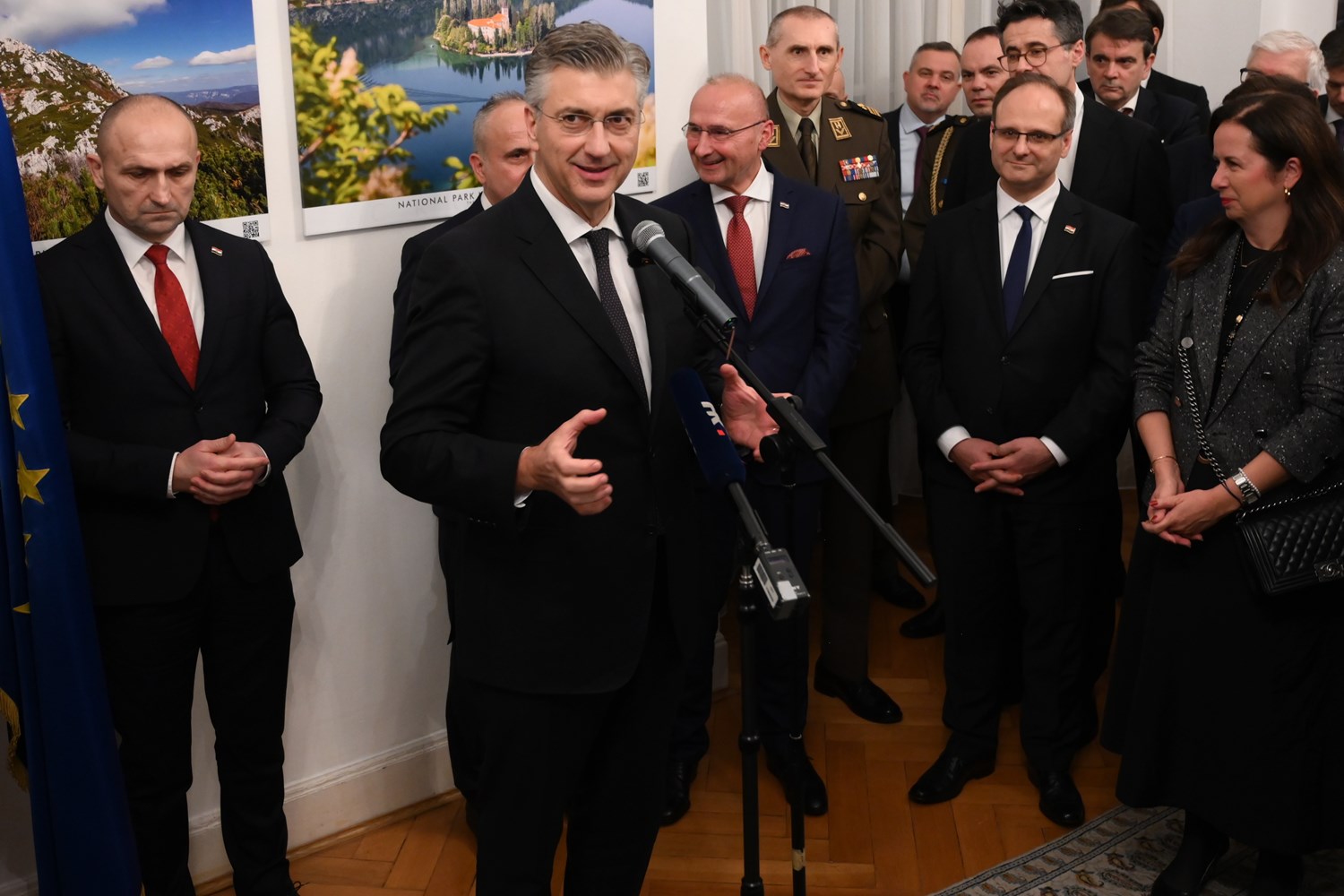
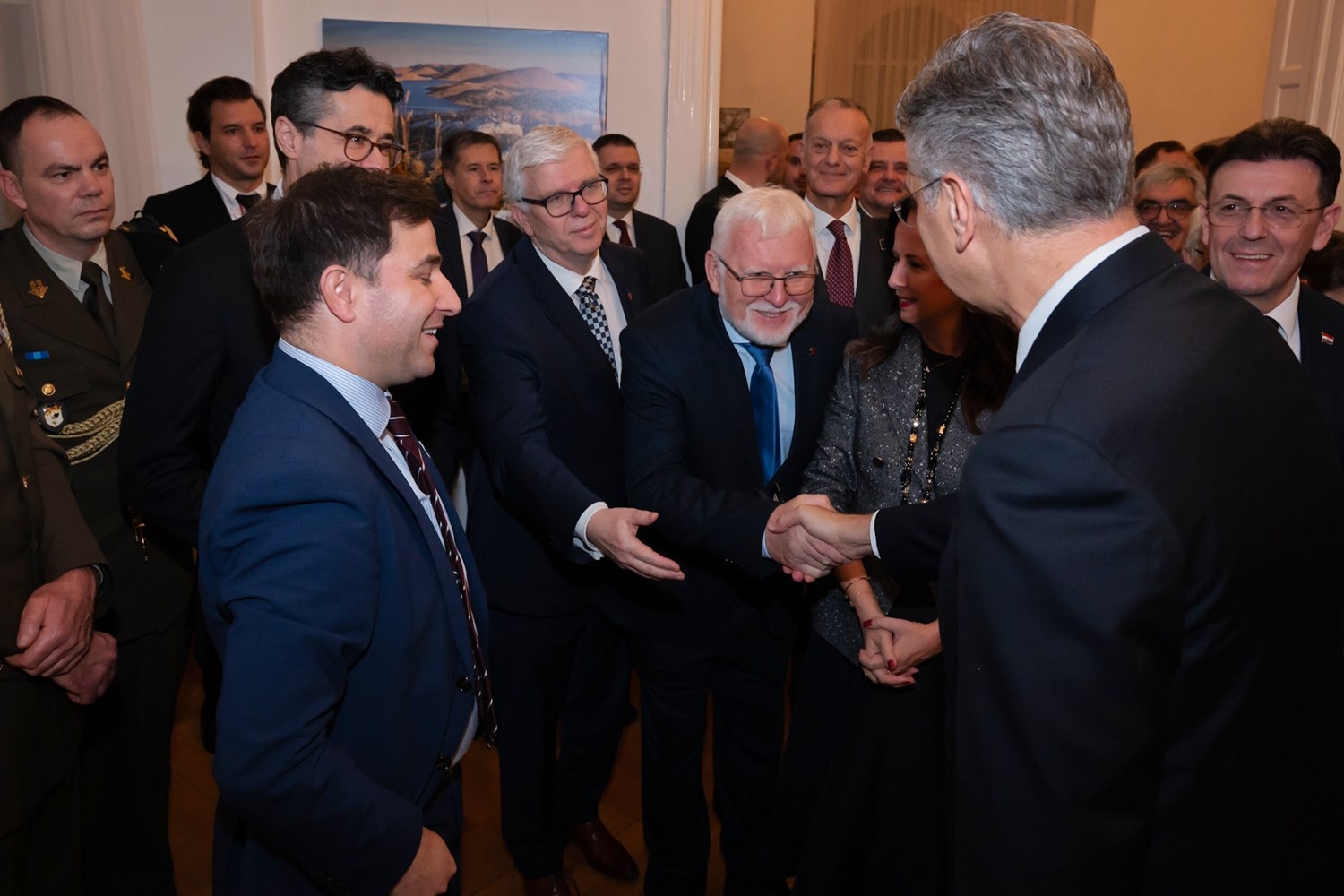
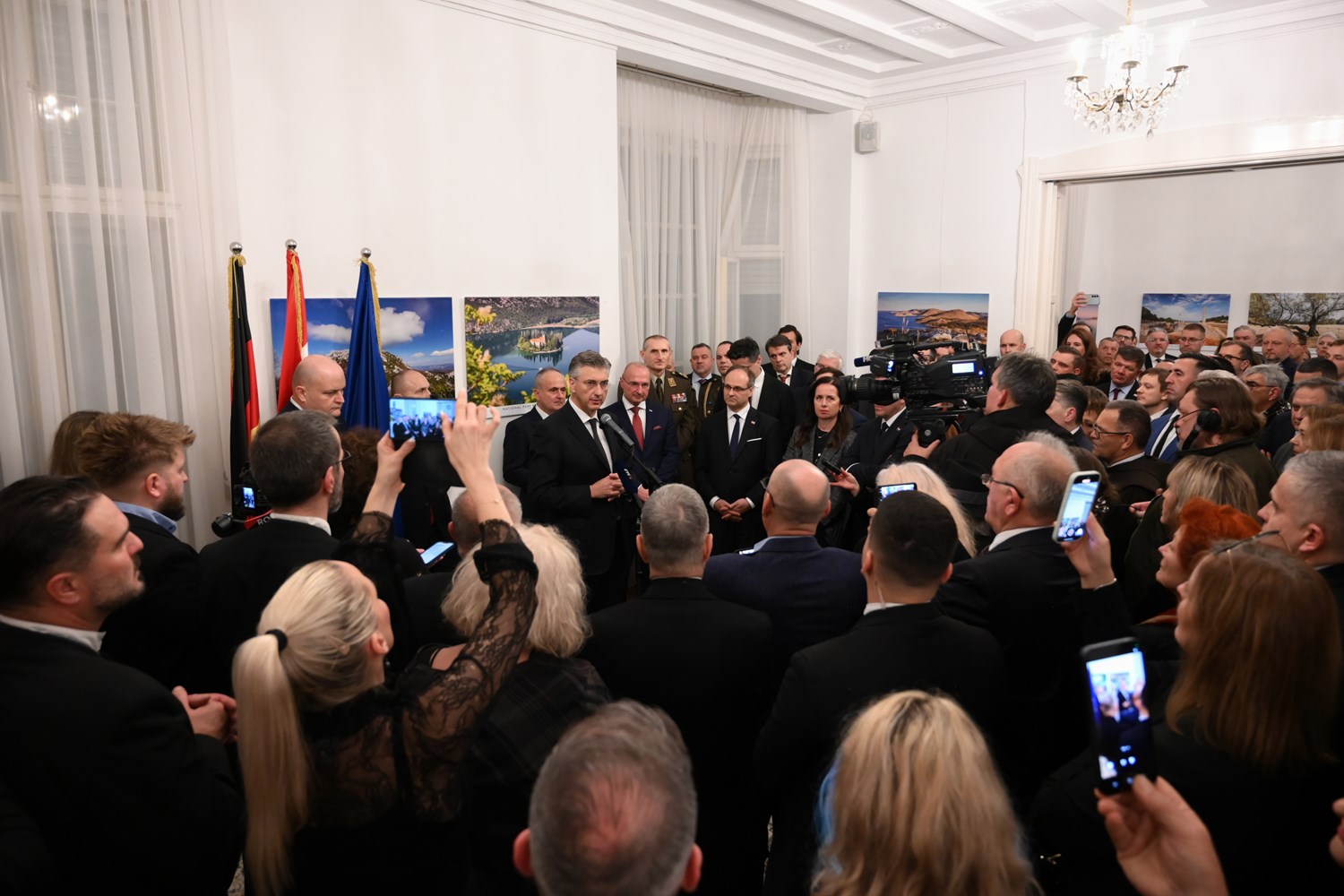
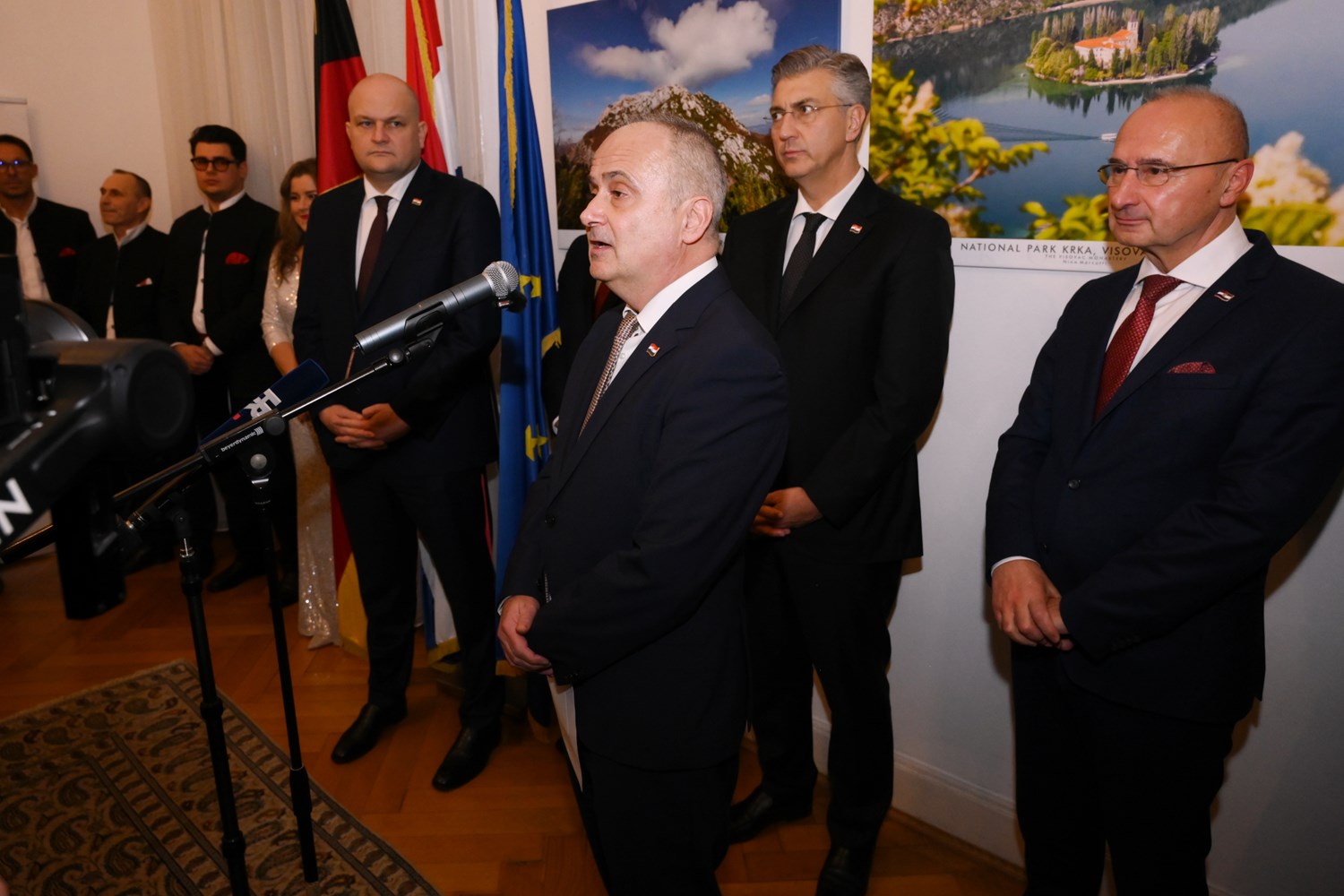
After the lecture at the Konrad Adenauer Foundation, Prime Minister Andrej Plenković met with representatives of the Croatian community at Embassy of the Republic of Croatia in Berlin.
By deepening their partnership and cooperation, Croatia and Germany are strengthening the European Union
Prime Minister Andrej Plenković arrived in Berlin today for a two-day visit to the Federal Republic of Germany, which began with a lecture at the Konrad Adenauer Foundation on the topic: "Building Europe's Strategic Resilience: Croatian-German Partnership in a New Era", in which he presented the Croatian perspective on the key challenges facing the European Union today, as well as the opportunities that all member states should seize together. He also spoke about the cooperation between Croatia and Germany, from Croatia's independence to the present day, particularly highlighting the importance and contribution of the Croatian community in Germany.
- 09.12.2025.
-
photo
- Download photo
Gallery


.jpg?preset=news-carousel-img)