The University of Delhi was founded in 1922 and plays a central role in Indian higher education and academic life, with more than 90 faculties, institutes and centres. It is known for its strong tradition in social sciences and humanities, law, economics, natural sciences and international studies, as well as for its active international cooperation and the organisation of high-profile academic and public events.
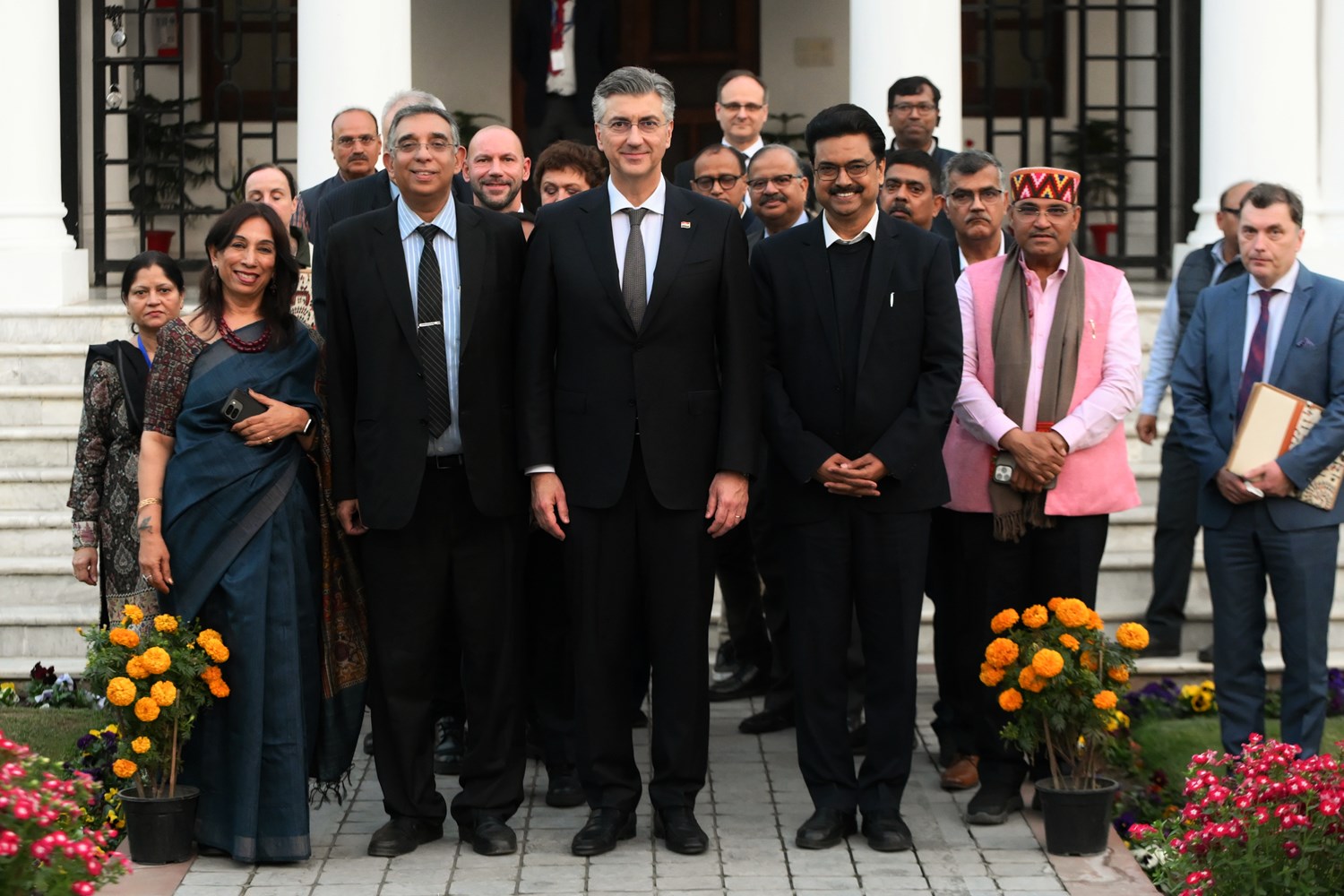
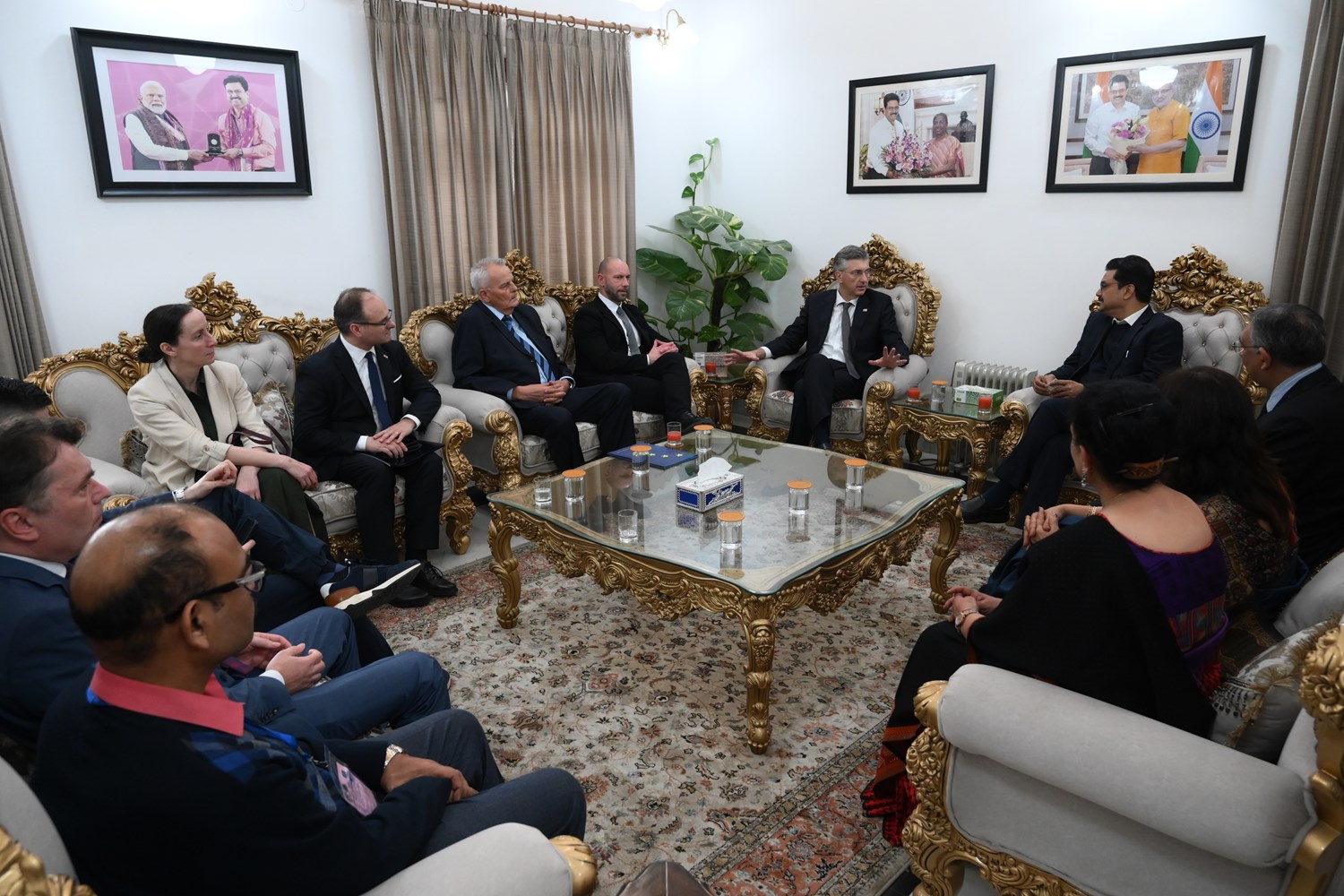
Before the lecture, the Prime Minister met with Vice-Chancellor Yogesh Singh and representatives of the University.
Historical ties between Croatia and India
“It is a great honour to speak within the historic walls of this University.
When I recently told a friend in Zagreb that I am going to speak at Delhi University, he said: “That is far away.”
I replied: in geography, perhaps. In history, curiosity and ideas - not at all.
Though geographically distant, Croatia and India are united by a deep admiration for their respective histories, vibrant cultures, and lasting values.
Our nations take pride in honouring tradition while embracing progress and innovation.
While our diplomatic relations were formally established in 1992, the ties between our peoples reach much further back in time.
Let me recall just a few examples:
Through his travels and writings, Marco Polo, believed to have been born on the island of Korčula, in present-day Croatia, helped introduce the wonders of India to Europe.
In the 15th century, traders and diplomats from Dubrovnik forged early links with Indian communities.
Every year on the 3rd of February, while Dubrovnik celebrates its patron Saint Blaise, a small Catholic community in Goa does the same.
In the village of Gandaulim, a statue of Saint Blaise is carried in procession.
For centuries, wherever Dubrovnik’s sailors travelled, they carried with them the image of their patron saint.
It is a small but powerful symbol of early globalisation - not of conquest, but of connection.
Sanskrit has been taught at the University of Zagreb since 1876, laying the foundation for longstanding cultural and academic exchange.
In the 18th century, the Croatian Carmelite Filip Vesdin - known in India as Paulinus Sancto Bartholomaeo - lived for thirteen years on the Malabar Coast.
In 1790, he authored one of the first printed Sanskrit grammars in Europe and became a pioneer of Indology.
Through his writings, he introduced European audiences to Indian civilisation with rare intellectual respect.
Even today, in Kerala, his name is remembered with appreciation.
It is a powerful reminder that intellectual bridges between our peoples were built long before modern diplomacy existed.
One of Croatia’s most influential political figures, Stjepan Radić, drew inspiration from the teachings and philosophy of Mahatma Gandhi.
And for me personally, it was a great honour to unveil the statue of Mahatma Gandhi in Zagreb - gifted by the President of India, Ram Nath Kovind, in 2019 - on the 150th anniversary of his birth.
Today, I would like to use this opportunity to offer you both a Croatian and a European perspective on the shifting global landscape, with a particular accent on the evolving relationship between Croatia and India.
Before turning to that, allow me to say a few words about my country.
Croatia’s Transformation and European Integration
Croatia emerged from the devastation of war and armed aggression in the 1990s, led by the Serbian leadership of the time and supported by the Yugoslav People’s Army.
From that trauma, Croatia has undergone a remarkable transformation into a confident, vibrant and resilient nation.
Today, as a member of NATO the EU’s newest Member State - and the only one with recent, lived experience of an external military aggression comparable to Russia’s invasion of Ukraine - Croatia brings a distinct understanding of what is at stake.
Our freedom was won at a high human cost.
By 1995 we liberated most of our occupied territory, and by 1998 we completed our territorial integrity with the peaceful reintegration of the Croatian Danubian region.
Policy of modern sovereignism
I have had the honour of serving as Prime Minister of Croatia since 2016 and I am particularly happy that I am now in the third consecutive term of office.
My policy has been coined by sintagma called the modern sovereignism, a policy which strengthens Croatia’s economic and social situation and welfare internally and uses its amplified international position for the development and the betterment of our society and nation in all aspects.
During the past decade, we have navigated an extraordinary succession of crises: we were, as the rest of the world, hit by the biggest pandemic in the last 100 years, which had an impact on our way of life, on the health situation of our nation, but also on economic consequences that it entailed.
However, unlike others, we were hit by two major earthquakes in 2020, which made the process of walking out of that crisis even more difficult, and, like that was not enough, we were faced with the energy crisis due to the Russian aggression against Ukraine.
Despite these challenges, we have preserved political stability, significantly strengthened our economic performance, and delivered on our strategic priorities.
Back in 2016 I said to my team we want to join Eurozone, Schengen and OECD. We are the first country in history of the Union that has managed to join both Eurozone and Schengen area on the same day, 1st January 2023. Now we stand ready to join the group of the 40 most advanced world economies, the OECD, backed by an A-category credit rating - five upgrades in seven years, the fastest ascent in Europe.
Croatian economic indicators
Croatia ranks among the: three fastest-growing economies in the Eurozone over the past four years, world’s top twenty tourist destinations, seventh in the EU in renewable energy share,eighth globally in implementing the Sustainable Development Goals.
Our GDP per capita rose from 62% of the EU average in 2016 to 78% at the end of 2025.
Economic indicators remain strong: our real GDP grew by 3.8% in 2024, and over 3% in 2025.
it is projected to grow by 2.7% in 2026, inflation, which is now 3,7%, is expected to decline to 2.1% by 2028;
From an Indian perspective, these figures may appear modest - but they are well above the European Union average, they are actually more than double.
Budget priorities for 2026 include pension reform, demographic measures, major capital investments, strengthening defence, which is a much wider trend within NATO and European Union given the Hague summit commitment to increase defence spending to 3,5 % of GDP by 2035 plus 1,5 % investments in defence related activities.
Guided by the experience of sacrifice, the determination of reconstruction, and the success of European integration, therefor Croatia stands ready to meet Europe’s challenges ahead.
The Three Seas Initiative and Europe’s North-South Axis
Ladies and Gentlemen,
Before turning to Croatia-India relations, let me briefly highlight the Three Seas Initiative.
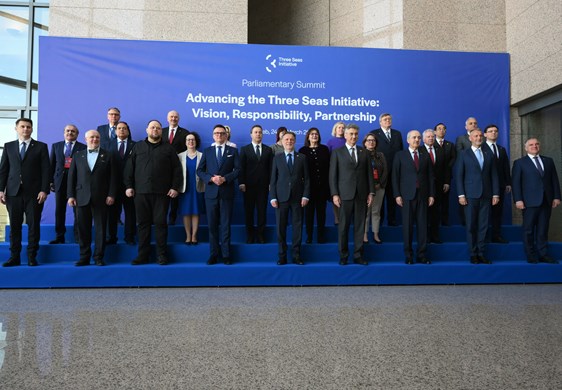
Croatia co-founded this platform ten years ago, together with Poland, and is presiding over it this year.
Its core purpose is clear: to strengthen transport, energy and digital infrastructure among thirteen EU Member States located between the Baltic, Adriatic and Black Seas, through concrete cross-border investment projects.
The region, home to 120 million citizens and a combined GDP exceeding 3 trillion euros, is one of the fastest-growing parts of the European Union - a figure that reaches nearly 160 million when we include Ukraine.
By closing long-standing north-south infrastructure gaps - in energy corridors, LNG terminals, electricity interconnections, rail, ports and secure digital networks - we are reinforcing the resilience and competitiveness of this part of the European Union.
In doing so, we are reinforcing one of Europe’s most dynamic north-south growth corridors.
Today, connectivity is not merely technical. It is strategic.
Europe’s new geopolitical playbook must be built on strategic connectivity.
Mediterranean gateway to Central Europe
In this context, Croatia occupies a unique position.
As a Mediterranean gateway to Central Europe, it provides one of the shortest and most secure maritime routes between Asia and the industrial heart of Europe.
The Adriatic is now entirely bordered by NATO member states, ensuring stability and security along this route.
With modern ports, developed transport corridors and strong infrastructure links to Central Europe, Croatia is positioned to serve as the Adriatic entry point into the EU’s central markets.
No other country combines membership in the Three Seas region with direct Mediterranean access in the same way.
This makes Croatia the natural link between the north-south axis of the Three Seas Initiative and the India-Middle East-Europe Economic Corridor - an initiative strongly supported by Prime Minister Modi, which connects India to Europe through resilient supply chains.
By strengthening links with IMEC and other emerging corridors, the Three Seas region becomes a bridge between Europe, Asia and the Middle East.
Our port of Rijeka is undergoing major modernisation and expansion, with the ambition of becoming the leading port of the northern Adriatic and a primary entry point for Indian goods destined for Central Europe.
Supported by upgraded rail corridors towards Hungary, Austria and beyond, Rijeka strengthens Europe’s internal connectivity while opening a direct Mediterranean gateway for trusted partners such as India.
Digital transformation is another core pillar of the Three Seas Initiative.
In this field, India’s global leadership in digital infrastructure and artificial intelligence makes it a natural partner for cooperation in applied AI, inclusive for all, industrial digitalisation and secure digital ecosystems linking our regions.
In this way, Croatia connects the Baltic-Adriatic-Black Sea axis with the wider Indo-Mediterranean corridor.
What we are building is not simply infrastructure - it is a strategic bridge between India and Central Europe.
Deepening the Croatia-India Partnership
Regarding the partnership between Croatia and India, we have developed close and friendly relations, founded on shared values of democracy, pluralism and equality.
The consistently positive trajectory of our bilateral relations was further reinforced by the official visit of my colleague, the Prime Minister of India Mr Narendra Modi, to Croatia in June 2025.
My visit to New Delhi this week, was another opportunity to meet Prime Minister Modi again and to continue our discussions on further strengthening our partnership.
We believe it is essential to invest joint efforts in the field of science and technology so that, through cooperation in research and development, we can contribute to global scientific progress.
Cooperation in these areas, as well as in culture, also has a strong people-to-people dimension, further strengthening the ties between our societies.
One of Saint Mother Teresa’s closest collaborators in India was a Croatian priest, Father Ante Gabrić.
After fifty years of serving the poorest in Bengal, he was buried with a handful of soil from his native Neretva valley and a small bottle of water from the Adriatic Sea.
At his funeral, thousands of Hindus, Muslims and Christians gathered together.
That, to me, is the most beautiful symbol of what genuine partnership between nations looks like.
In this context, I want to particularly highlight the signing of the Memorandum of Understanding on the establishment of a Department of Hindi Language at the University of Zagreb, which has provided new impetus to academic and cultural cooperation.
We already have positive examples in this field, such as the Department of Indology at the University of Zagreb and the Lectureship of the Croatian language at the university in New Delhi, the first of its kind in Asia.
Trade, Investment and Complementarity
Also, there is significant potential to deepen our economic cooperation.
We welcome India's interest in increasing investment in Croatia's key industries.
These include pharmaceuticals, agriculture, information technology, clean and digital technologies, renewable energy and semiconductors.
India represents an important Asian trading partner for Croatia.
In the first ten months of 2025, our trade exchange recorded a growth of 12 per cent, reflecting a positive upward trend.
At the same time, the number of Indian tourists visiting Croatia continues to increase, further strengthening people-to-people ties between the two countries.
Also, foreign workers from India represent 15 per cent of all non-EU foreign workers in Croatia.
We believe that identifying areas in which our two economies are complementary will help boost bilateral trade and contribute to the development of resilient and dependable supply chains.
Security, Defence and Emerging Domains
Another aspect in which we see opportunity for a stronger collaboration is security.
The security challenges of the 21st century, from terrorism, hybrid and cyber threats to emerging technologies and the protection of critical infrastructure, require close cooperation, trust, and exchange of expertise among partners.
In this context, Croatia and India share an interest in strengthening dialogue and exploring opportunities for collaboration in the fields of defence and space, which offer new opportunities for stronger partnership and technological advancement.
Furthermore, Croatia supports enhanced cooperation in key areas including defence production, joint training, military exchanges and cybersecurity.
Both Croatia and India have chosen the Rafale multirole fighter aircraft, which opens additional opportunities for dialogue and practical cooperation between our air forces.
In today's world, faced with numerous challenges and threats, Croatia needs strong and reliable partners.
I often say that today’s global issues stem from two diverging positions. One - democracies which see the world through cooperative methodology optics and the authoritarian regimes that see the world optics in a conflictual methodology.
That is why I remain committed to developing our relations with India, confident that this will contribute not only to our bilateral interests, but also to global peace and stability.
Artificial Intelligence and Responsible Innovation
Moving on to the subject of advanced technologies, I have already mentioned that Croatia places much importance on new technologies.
We see potential for a stronger and closer collaboration with India.
Artificial intelligence is transforming our economies and education systems at extraordinary speed.
Not long ago, a student asked me: “Prime Minister, will AI replace us?”
I replied: I am more concerned about people who stop thinking because they rely too much on AI. I think this is the real issue we need to address.
Artificial intelligence will amplify this challenge.
It can empower creativity, productivity and innovation - but it can also amplify disinformation, manipulation and dependency.
The real question is whether we will remain authors of our own judgement - or outsource it to machines.
Technology must enhance human judgement, not weaken it.
That is why Croatia supports the development of AI that is human-centred, trustworthy and aligned with democratic values.
We believe innovation must be responsible and anchored in ethical standards that safeguard individual freedom and critical thinking.
I would like to use this opportunity to once again congratulate India for organising the Global AI Impact Summit.
The European Union and India: Natural Strategic Partners
EU and India are often described as "natural partners".
We are both large, pluralistic democracies, navigating a world that is becoming more fragmented, competitive, and less predictable.
We both believe in multilateralism, open cooperation, and strategic autonomy understood not as distance from others, but as the ability to act responsibly and independently.
From Europe's perspective, India is not only a regional power but a global partner - especially when it comes to technology, climate change, and inclusive growth.
Our partnership is already moving from ambition to implementation.
Through the Trade and Technology Council, Horizon Europe, and Global Gateway, cooperation is delivering results: ethical AI, digital infrastructure, renewable energy, and sustainable development.
In other words, innovation with a purpose - not technology for technology's sake.
Economics also play a central role.
The EU-India Free Trade Agreement will strengthen trade, investment, and supply-chain resilience.
At the same time, trilateral development projects in third countries will focus on digitalisation, clean energy, agriculture, water, and social programmes.
The underlying idea is simple but powerful: growth should be inclusive, sustainable, and globally relevant.
That is how partnerships last.
The Indo-Pacific: Security, Stability and Strategic Autonomy
That broader vision naturally extends to the Indo-Pacific, a region where economics, security and technology increasingly converge.
Developments there directly shape global trade, energy flows and economic stability - including in Europe.
India's leadership and Europe's growing engagement provide a strong basis for deeper cooperation, particularly in safeguarding sea lanes and strengthening regional stability.
Security today extends beyond ships and borders to cyber threats, disinformation and emerging technologies that can escalate tensions faster than diplomacy can respond.
This is why the EU and India are deepening their engagement under the EU’s updated Indo-Pacific strategy for 2026.
A key milestone has been the EU-India Security and Defence Partnership, which establishes a permanent framework for joint work on maritime security, cyber resilience, counter-terrorism and regional stability.
The principle is clear: no country can manage these risks alone.
An open, secure and rules-based Indo-Pacific is not an abstract concept — it is a shared strategic interest aimed at preventing instability before it becomes a crisis.
Building the Future Together
All these strategies, partnerships and corridors ultimately depend on one decisive factor - people.
In that context I would like to stress that you, the students of Delhi University, stand at a remarkable intersection of history and possibility.
India is not merely participating in the global economy - you are reshaping it.
As future engineers, policymakers, entrepreneurs, and thinkers, you will define the character of India's rise and its partnerships across the globe.
The relationship between Croatia, Europe, and India isn't just about governments and trade agreements - it is about you, the generation that will build the connections, forge the innovations, and create the solutions for challenges we can barely imagine today.
Croatia's journey from war to prosperity taught us that resilience, vision, and partnerships can overcome any obstacle.
In Dubrovnik, we built stone walls to safeguard our freedom - and diplomatic bridges that connected us to distant shores, including India.
Here in Delhi, you are building bridges of science, technology and ideas.
Both kinds of bridges endure.
You inherit a different set of challenges, but the same principle applies: the future belongs to those who dare to shape it.
My message to you is simple: in an increasingly fragmented world, bridges matter more than walls.
And Croatia will continue to serve as a Mediterranean gateway to Central Europe - a trusted bridge on the shortest route between India and the heart of Europe.
India and Europe need each other - more importantly, the world needs what we can build together.”
NATURAL STRATEGIC PARTNERS
India and Europe need each other, and the world needs what we can build together
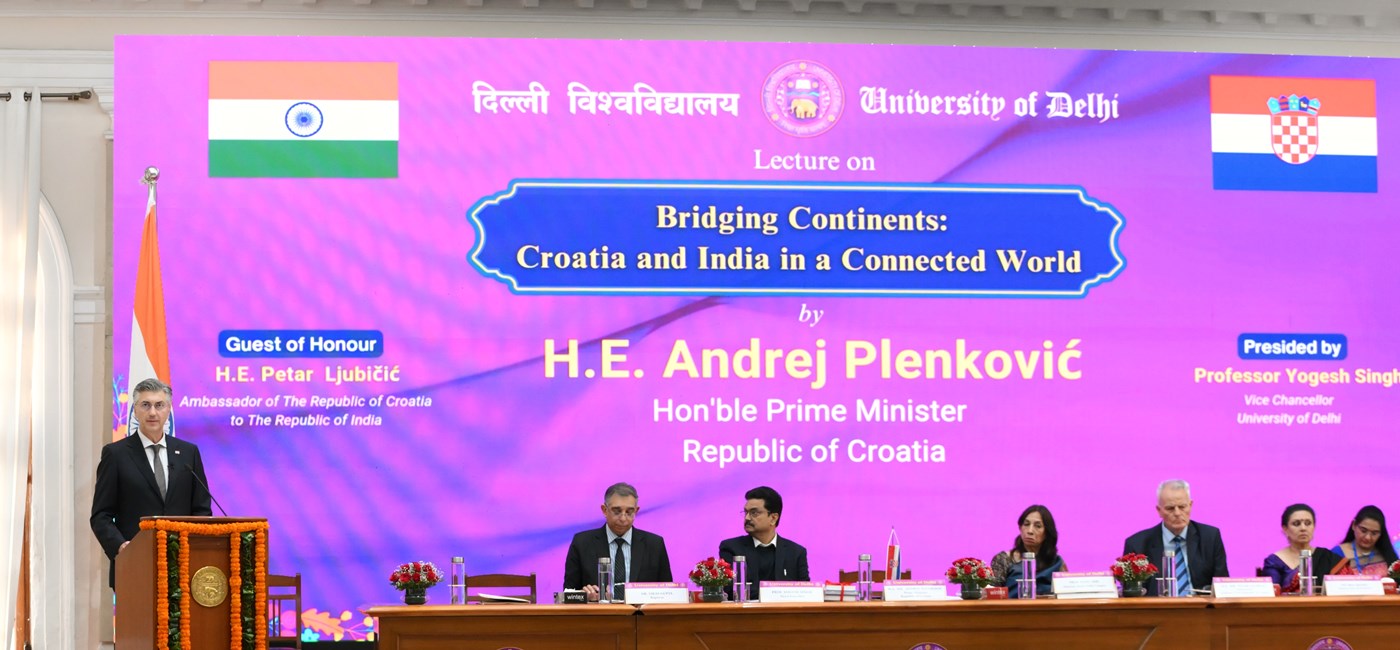
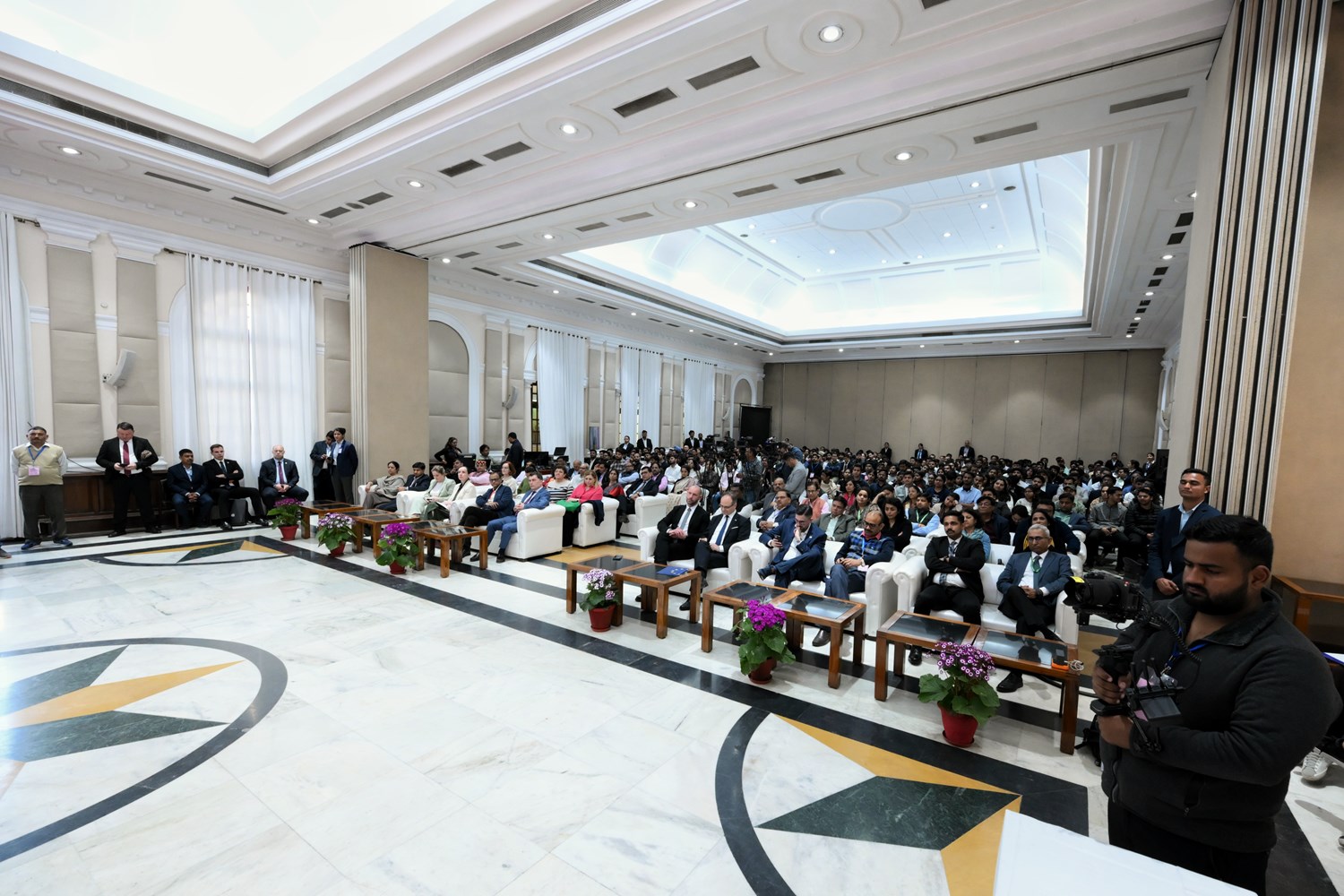
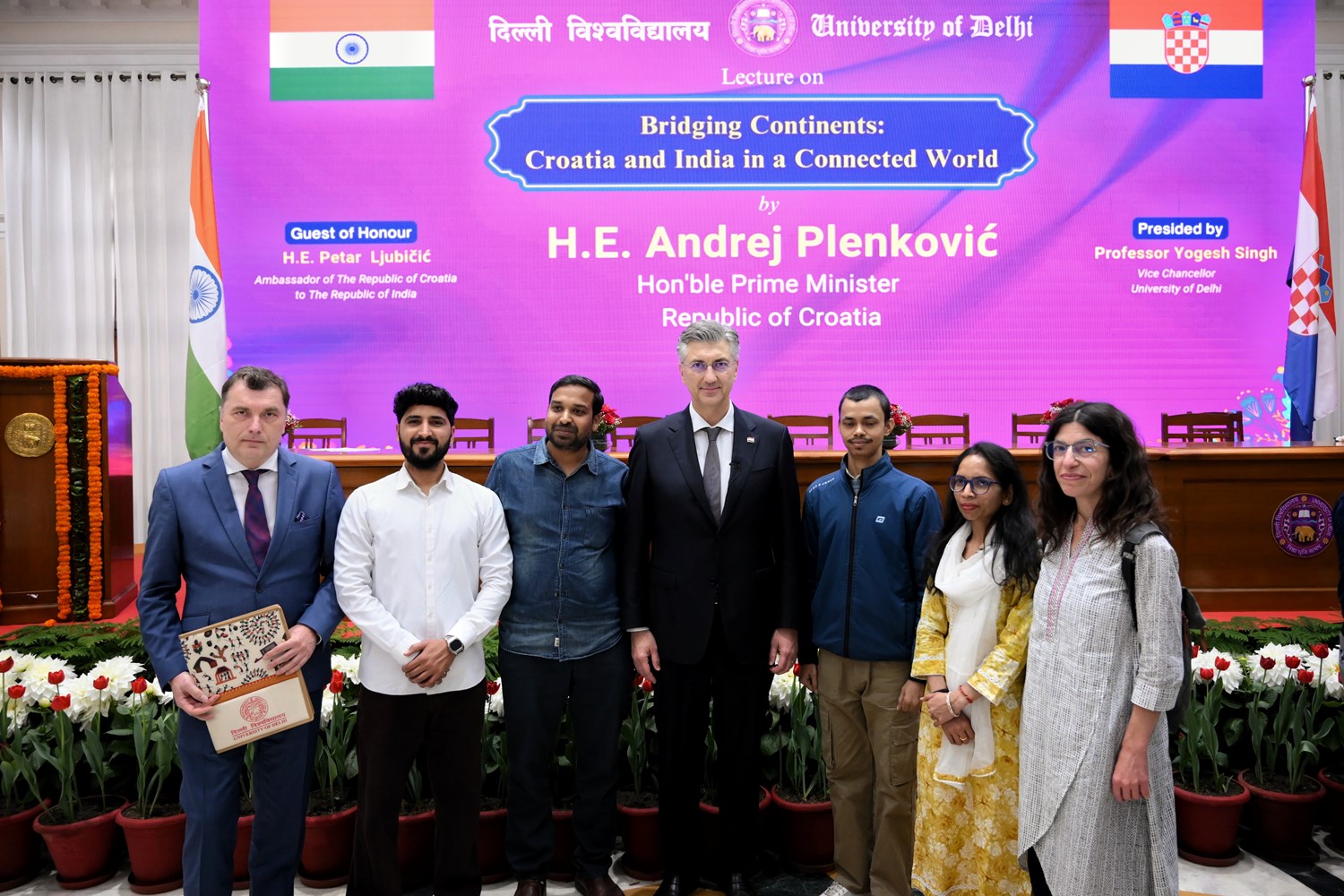
Prime Minister Andrej Plenković today gave a lecture at the University of Delhi, one of the most prestigious and largest public universities in India, on the topic "Bridging Continents: Croatia and India in a Connected World".
- 20.02.2026.
-
photo
Gallery
.JPG?preset=gallery-fullsize)
.JPG?preset=gallery-fullsize)


.jpg?preset=news-carousel-img)