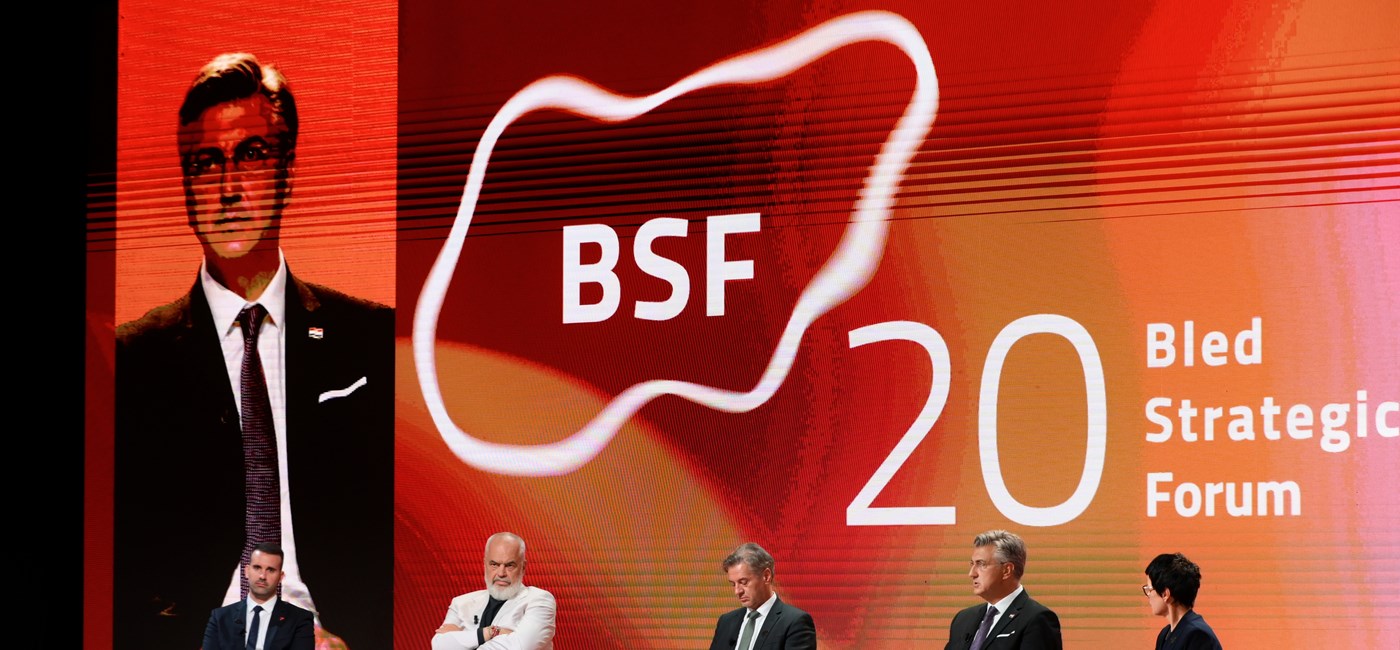
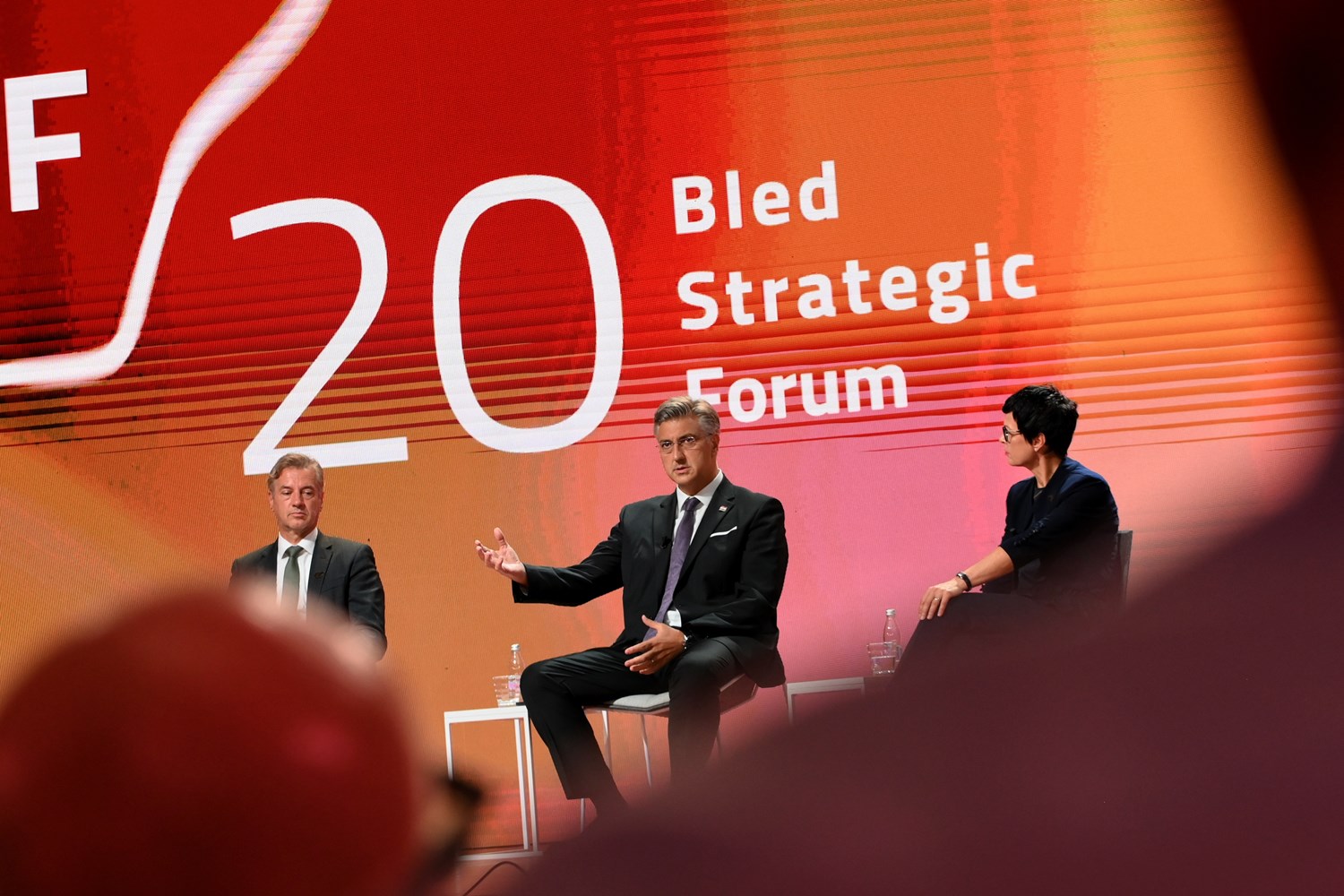
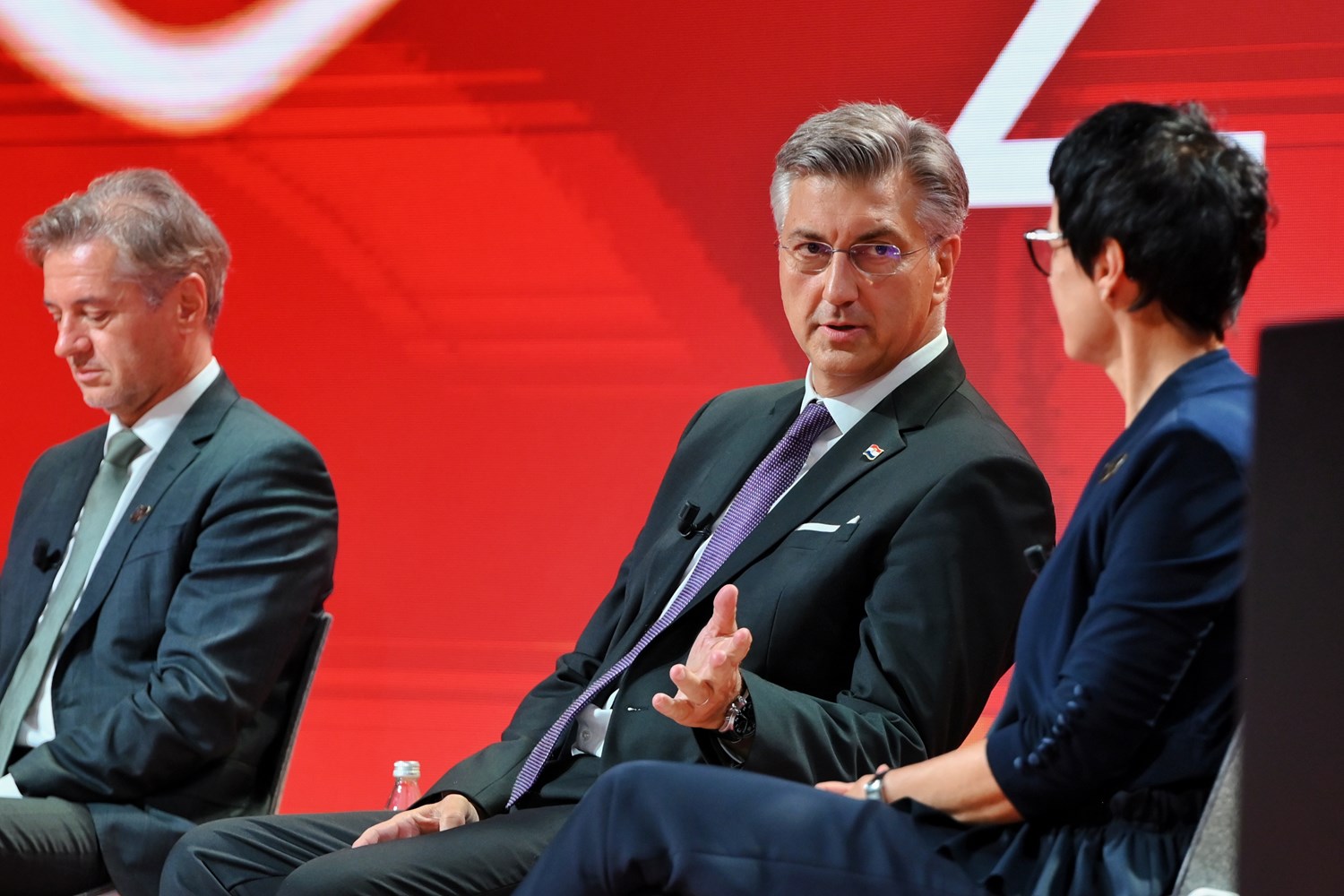
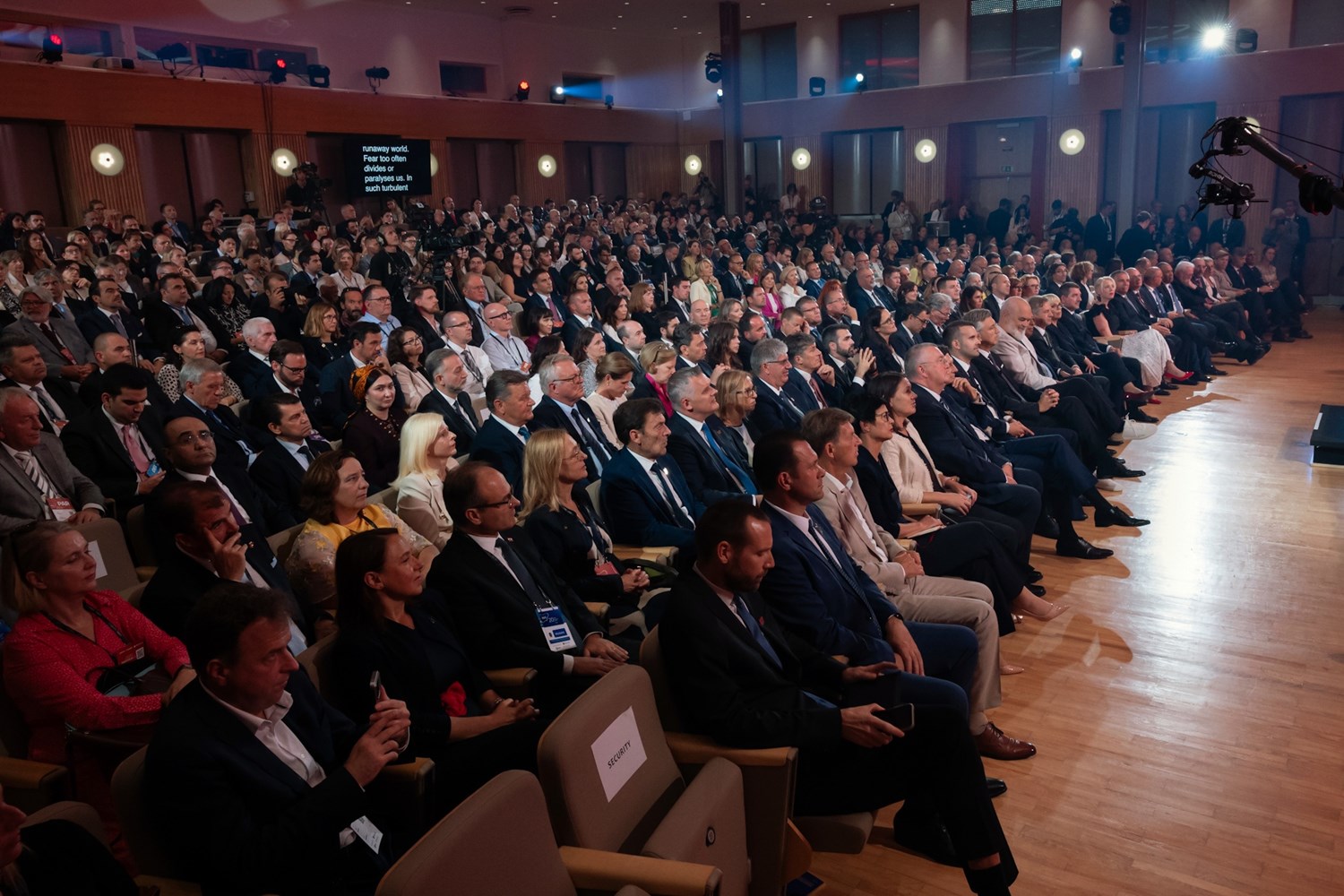
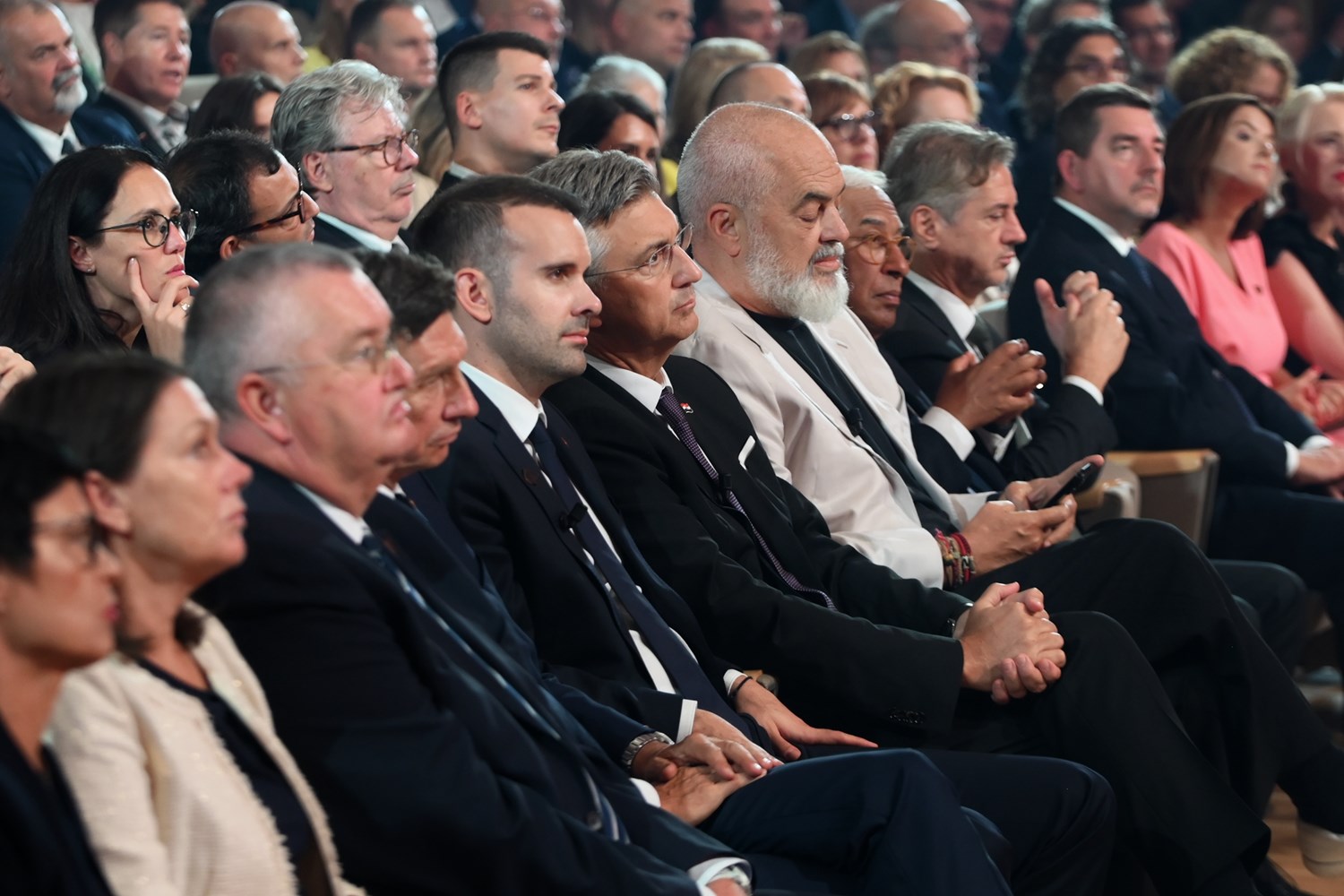
Prime Minister Andrej Plenković attended the 20th Strategic Forum in Bled. He participated in the central debate on the enlargement of the European Union, entitled "Bled Pledge: A Dream or Reality?", opened with an introductory speech by the President of the European Council Antonio Costa, along with the Prime Ministers of Slovenia, Albania and Montenegro, Robert Golob, Edi Rama and Milojko Spajić, and the European Commissioner for Enlargement Marta Kos.
In his address, Prime Minister Plenković stressed that the issue of the enlargement of the European Union has returned to focus, especially after the Russian aggression against Ukraine, recalling that in the last 18 years only Croatia has joined the membership.
He is not sure, he said, that the enlargement is a real priority for the members of the European Council, particularly highlighting the gap in the period from 2003 to 2018, which is now filled by regular summits of the EU and the countries of Eastern Europe.
The EU decision-making process and the budget are key to further enlargement
While the basic elements with further enlargement are, of course, the preparedness of the candidate countries, political momentum and support, the real issue is the decision-making process and the budget.
These are two unspoken key elements - whether large countries that finance 80 percent of the budget will allow smaller ones, with a more modest contribution, to make decisions. That is why, he points out, candidate countries should pay special attention to what Germany or France are saying about the decision-making process.
As for the bilateral issues of candidate countries and member countries, the Prime Minister believes that linking them to the accession process is not good for that process.
In this context, he cited North Macedonia as an example, recalling that at the Summit in Zagreb in 2000, that country had advanced further than Croatia, and 25 years later, they did not start the accession process properly, while Croatia has been a member for 12 years.
Therefore, he believes that it is necessary to find a common strategy in order to avoid such situations.
Candidate countries, he added, should be helped in implementing the necessary reforms.
"Unless both conditions are met - fulfilment of criteria and the political momentum - there will be no enlargement", he warned.
The slower the enlargement, the more influence other actors will have on these countries
He also referred to the broader geopolitical context, especially in the issue of European security.
The world we lived in until a few years ago has changed rapidly and irreversibly, he said, noting that the decision made at the recent NATO summit to increase defense spending to 5 percent by 2035 would have been unthinkable just a few years ago.
With the Russian aggression on Ukraine in 2022, he pointed out, Putin showed his cards, and he showed them again with new attacks after the meeting in Alaska, and nothing has moved an inch towards any concept of striving for peace.
After the presidential elections in the United States, he added, we are still in the phase of consolidating transatlantic relations.
The slower the enlargement of the European Union, he warned, the more influence other actors will have in the Western Balkans. Therefore, the enlargement, as well as the change in the global context, should be viewed very soberly, he said.
I personally support the enlargement process, I think all candidate countries are making serious efforts, but they need to stabilize politically in order to secure real support, he said.
Plenković: EU enlargement, as well as the change in the global context, should be viewed very soberly
While the basic elements in further enlargement of the European Union are the preparedness of the candidate countries, political momentum and support, the real issue is the decision-making process in the Union and the budget, said Prime Minister Plenković in today's keynote debate at the Bled Strategic Forum. These are two unspoken key elements, he added, - whether large countries that finance 80 percent of the budget will allow smaller ones, with a more modest contribution, to make decisions. Therefore, he pointed out, the candidate countries should pay special attention to what Germany or France are saying about the decision-making process. "Unless both conditions are met - fulfilment of the criteria and the political momentum - there will be no enlargement," he warned.
- 01.09.2025.
-
photo
- Download photo
Gallery


.jpg?preset=news-carousel-img)