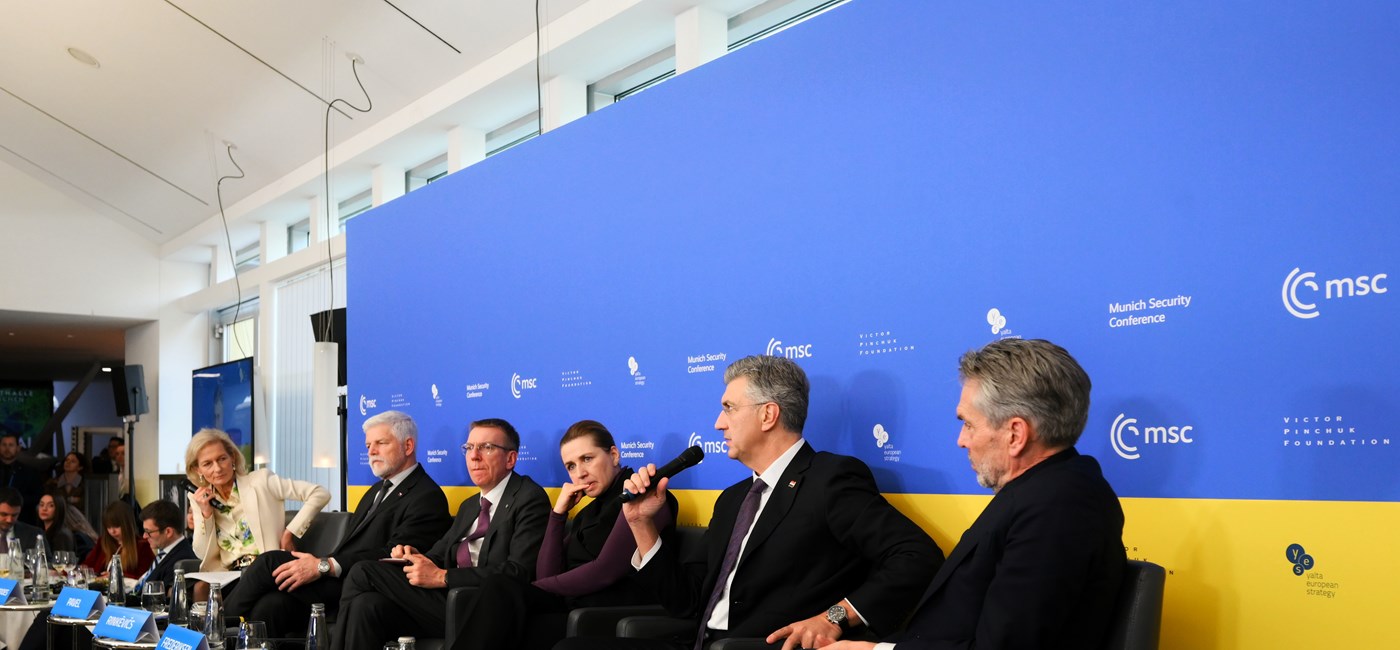
Along with the Prime Minister, the President of the Czech Republic Petr Pavel, the Prime Minister of the Kingdom of Denmark Mette Frederiksen, the Prime Minister of the Kingdom of the Netherlands Dick Schoof and the President of the Republic of Latvia Edgars Rinkevics participated in the panel.
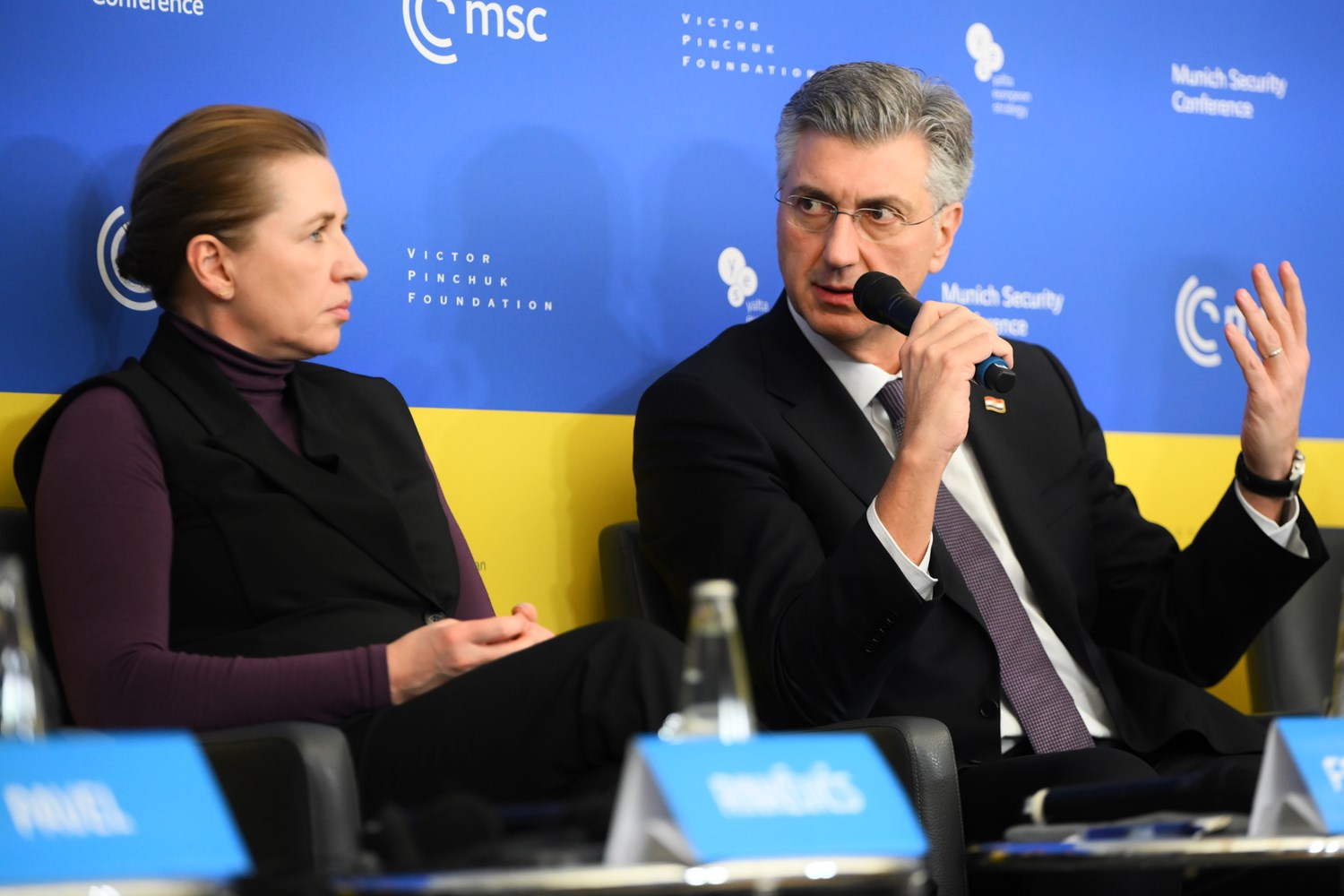
Asked if he was optimistic about the situation in Ukraine in the short term, Prime Minister Plenković said that no one who was involved in any way in helping Ukraine and efforts to stop Russian aggression was currently overly optimistic.
“I would say that I am very realistic. I would not say either pessimistic or optimistic, but realistic that this will be very difficult, because no matter how much pressure is put on Russia, one thing has not changed. There has been no change in the political course and line of the Russian leadership,” he said.
He believes that Russia has three main goals. The first is to establish a new type of relationship with the United States, using Ukraine as an argument. The second is to gradually get rid of sanctions, and the third is to rehabilitate its international position.
Ukraine must get security guarantees and not agree to de jure secession of territory
He reminded that a few years ago, Russia's first argument was that Ukraine should be denazified. Then that narrative was changed to one of war between Russia and the West, and then to a new world order.
Now, he added, we are in the third phase in which Russia expects the fragmentation of global opinion on the aggression against Ukraine.
This aggression in the eyes of some other players, not Europeans, becomes just another war in the world that is happening in Europe and thus becomes a European problem, Prime Minister Plenković warned.
It is a strategy and they want to focus the discussion on that, he added.
He believes that all peace efforts, if they reach a point where a just and sustainable peace would be established, should have two components. The first are security guarantees for Ukraine, and the second is not to agree to the de jure recognition of the secession of the territory for the future.
We must continue to help Ukraine rebuild key infrastructure and strengthen military capabilities
In the meantime, the European Union and individual countries continue to support Ukraine militarily, Plenković stressed, adding that the decision made in December at the European Council in Brussels on 90 billion euros in financial assistance was the right decision that created the conditions for Ukraine's survival, both in terms of military equipment and the functioning of the state.
The Prime Minister believes that we should continue to help Ukraine overcome the enormous damage to its energy infrastructure, by providing bilateral assistance and replacing it with appropriate machinery or equipment that each of us has and donates, and by helping to strengthen military capabilities.
"I think that Ukraine has become a European shield, an innovative defense hub and an example of a new transformative resilience that we have never seen," he said.
We may be here for the fourth year, unfortunately, but we can say that we are here for the fourth year in which Ukraine stands strong, he stressed, recalling the Russian plan at the beginning of the aggression according to which Ukraine would disappear in four days.
Croatia strongly supports Ukraine's membership in the European Union
Regarding Ukraine's membership in the European Union, Prime Minister Plenković recalled that just before the start of the Russian aggression against Ukraine, he signed a bilateral agreement with President Zelensky in Kiev, in which Croatia clearly supports Ukraine's ambitions for membership.
Under normal circumstances, he explained, the approach to the enlargement of the European Union is based on fulfilling the criteria and the merits of each individual candidate country. Now, this usual methodology is being tested, he added, and there is talk of a possible geopolitical approach.
Namely, the peace negotiations are now being linked to Ukraine's future membership, which would enable faster access, but this would require a political decision to say that everything we have done so far is in the past and that we are now leaning towards a geopolitical approach.
If an agreement is reached on faster access, said Prime Minister Plenković, a discussion will also be opened about all the other countries that are waiting.
An important element of further enlargement is the absorption capacity of the EU
At the same time, he pointed out another important element that should be taken into account, which is the absorption capacity of the European Union, i.e. the influence on the European Union's budget and the decision-making process.
"All this can be done in a creative way, but I am signaling this as an extremely difficult and delicate process that cannot be taken for granted if it is only mentioned in the media or even included in some, say, initial documents in the peace negotiations," said the Prime Minister, adding that one should be realistic in this process.
He believes, he said, that in general there is a lot of goodwill among the majority of member states, but this must be done in a way that will not create a major imbalance in the functioning of the Union.
A safer, more sustainable and resilient Mediterranean
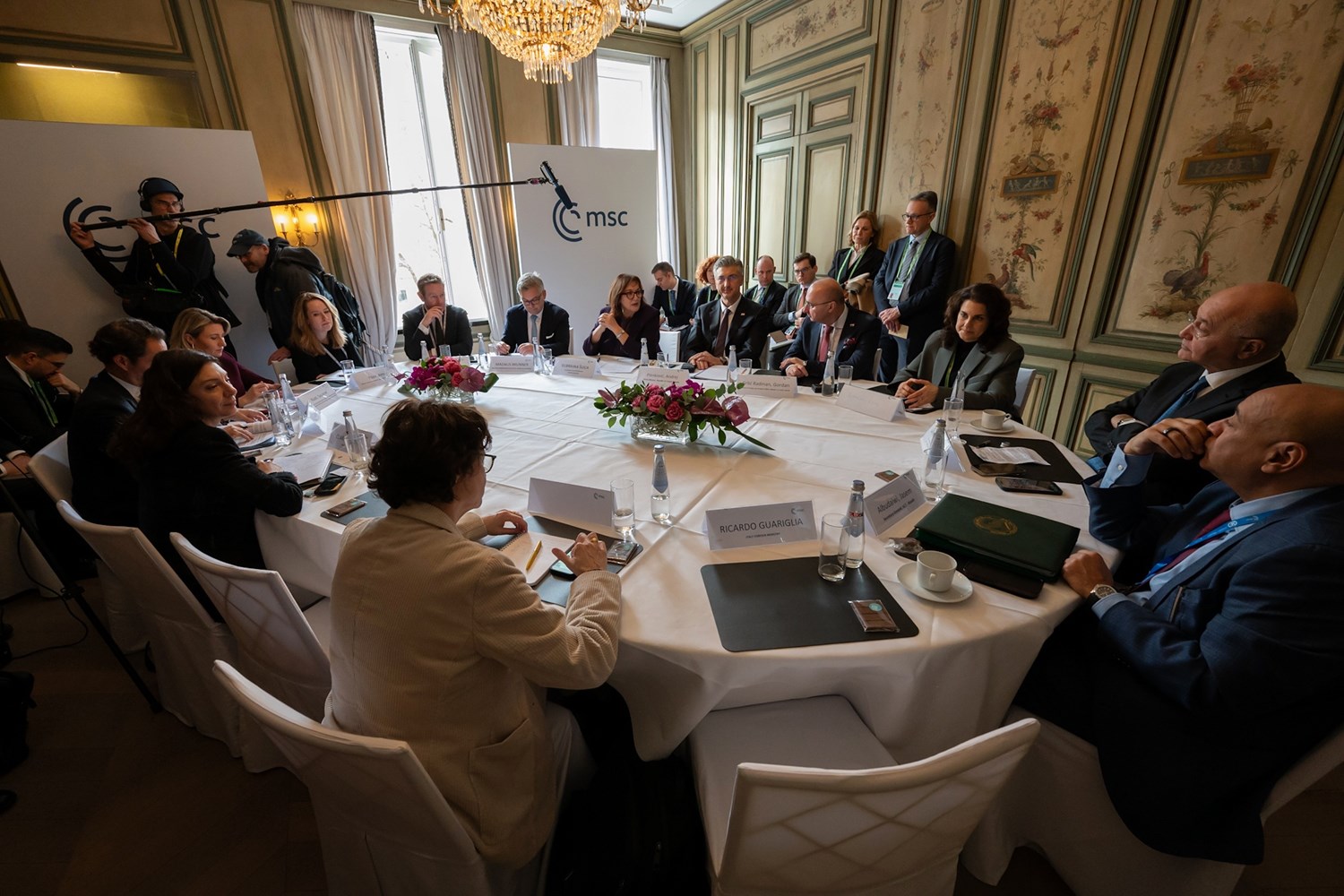
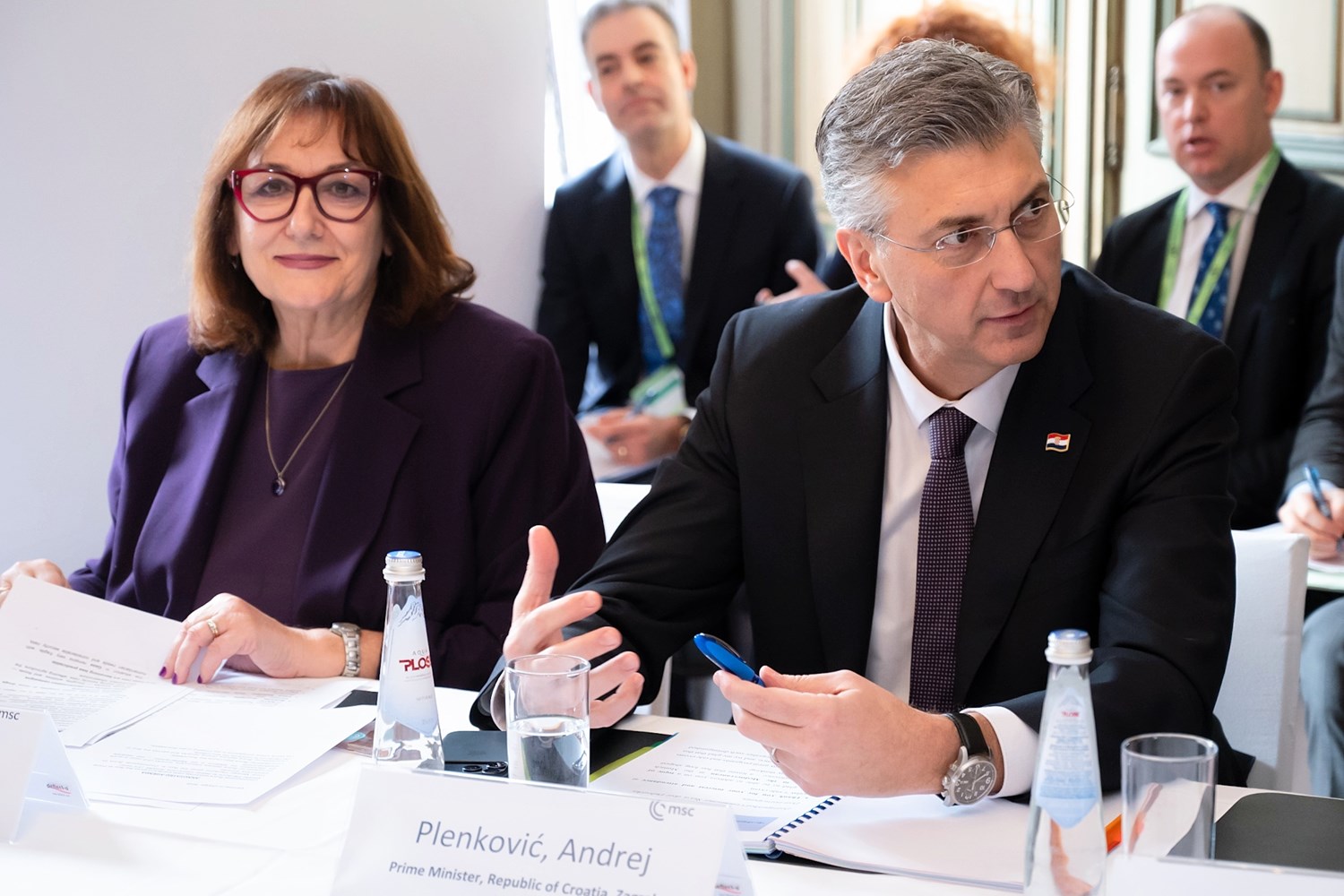
Earlier today, the Prime Minister, together with the European Commissioner for the Mediterranean, Dubravka Šuica, participated in a roundtable on the topic of “Re-shaping our essential security relations in the Mediterranean“.
Croatia, which connects the Mediterranean with Central Europe, is this year chairing the EU MED9 group, which was launched to strengthen cooperation between the nine Mediterranean member states of the European Union.
"We look forward to meeting leaders at the summit to be held in Split in October", the Prime Minister said on that occasion.
During our presidency, Croatia will focus on three key priority topics: a safer, more sustainable and resilient Mediterranean, he added.
Bilateral cooperation, European policy and transatlantic relations
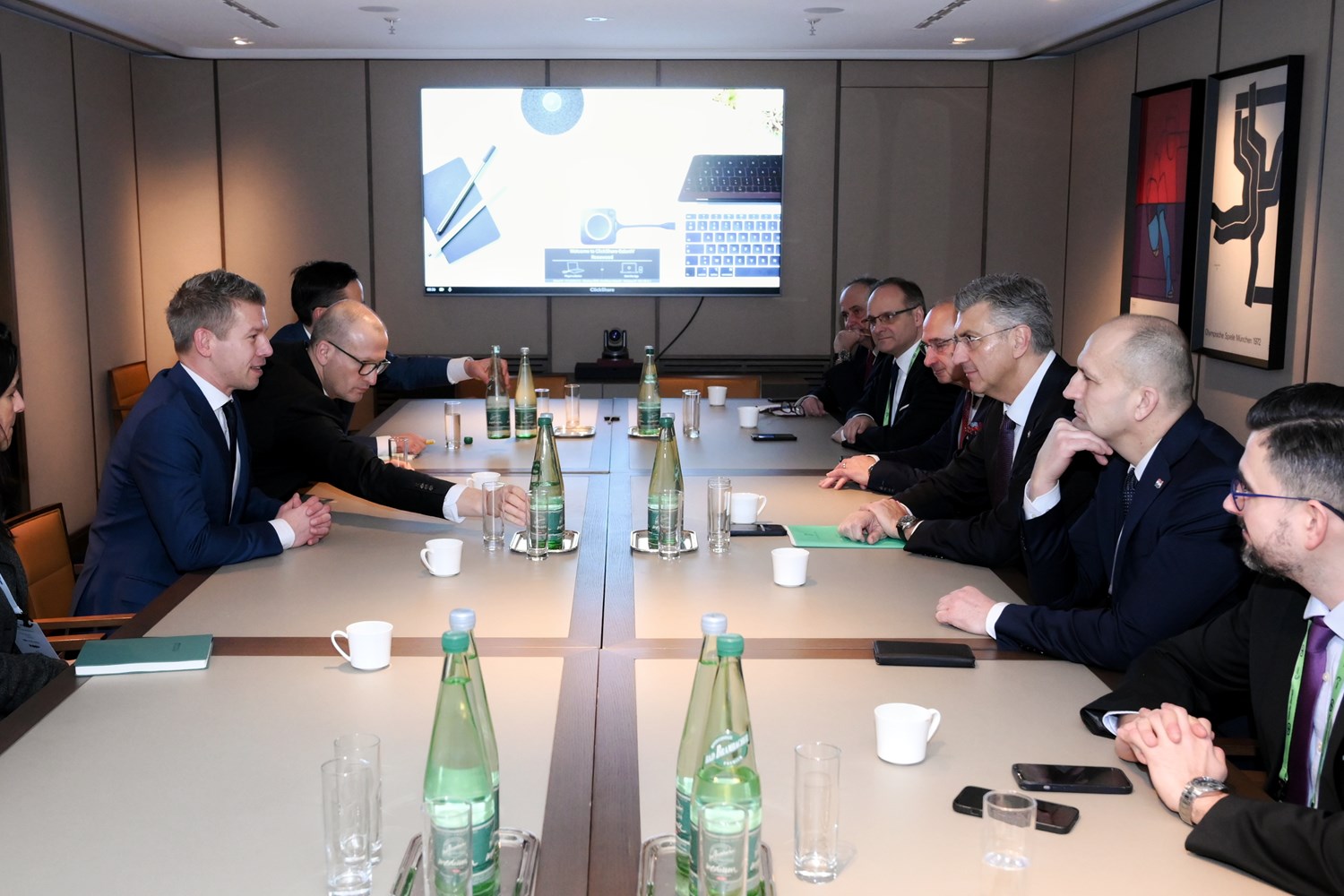
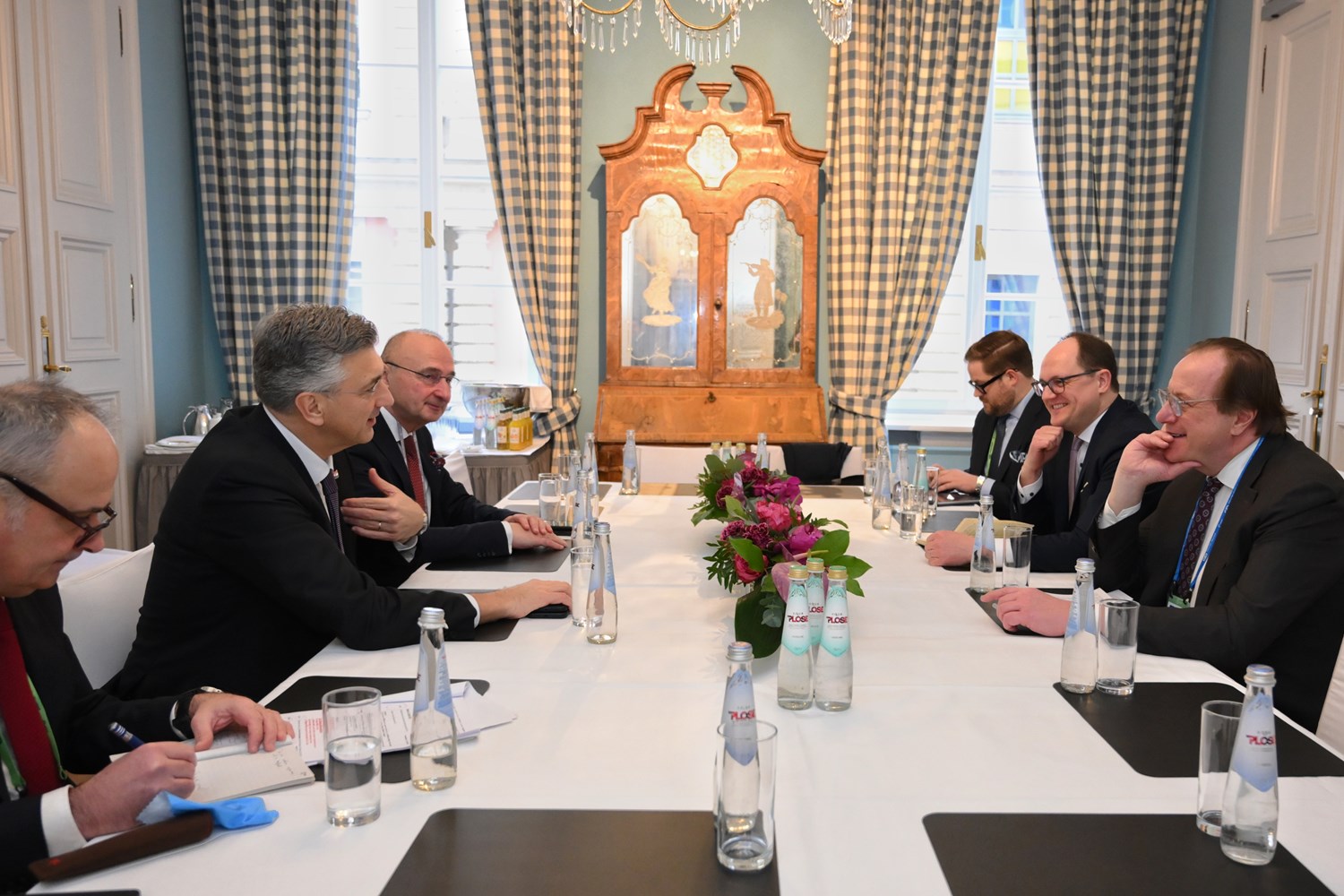
The Prime Minister held numerous bilateral meetings today.
He discussed bilateral relations, the upcoming elections in Hungary and global security challenges with the President of the TISZA party, Peter Magyar, in particular the importance of achieving sustainable peace in Ukraine.
"Croatia wants to build good-neighborly relations with Hungary and resolve open issues," said Prime Minister Plenković.
At a meeting with the President and CEO of the Atlantic Council, Frederick Kempe, the importance of strengthening transatlantic relations was emphasized, especially in the context of numerous global crises and threats.
"We consider the Three Seas Initiative, which Croatia chairs this year, to be a platform for further improving cooperation between Croatia and the United States of America," said the Prime Minister.
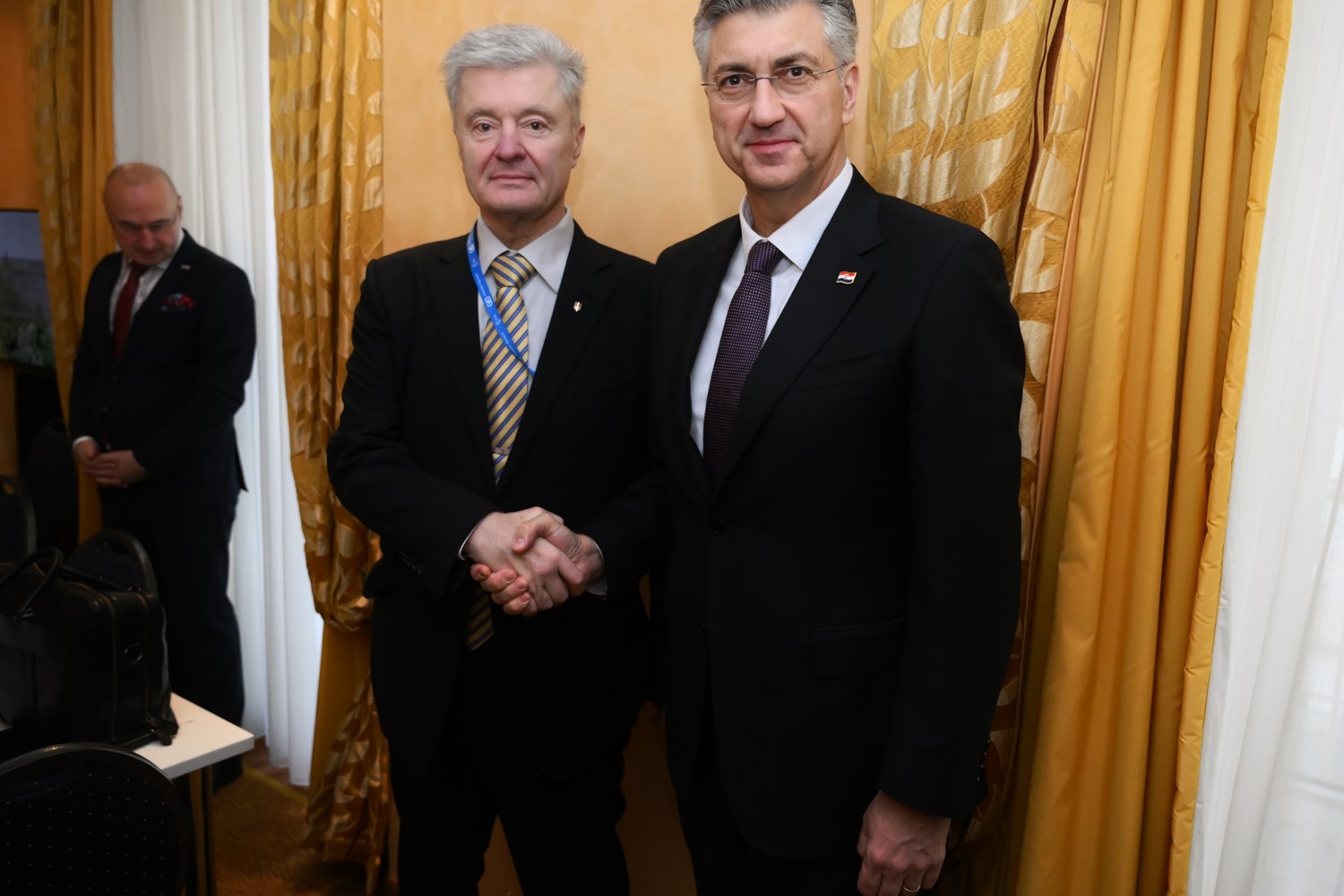
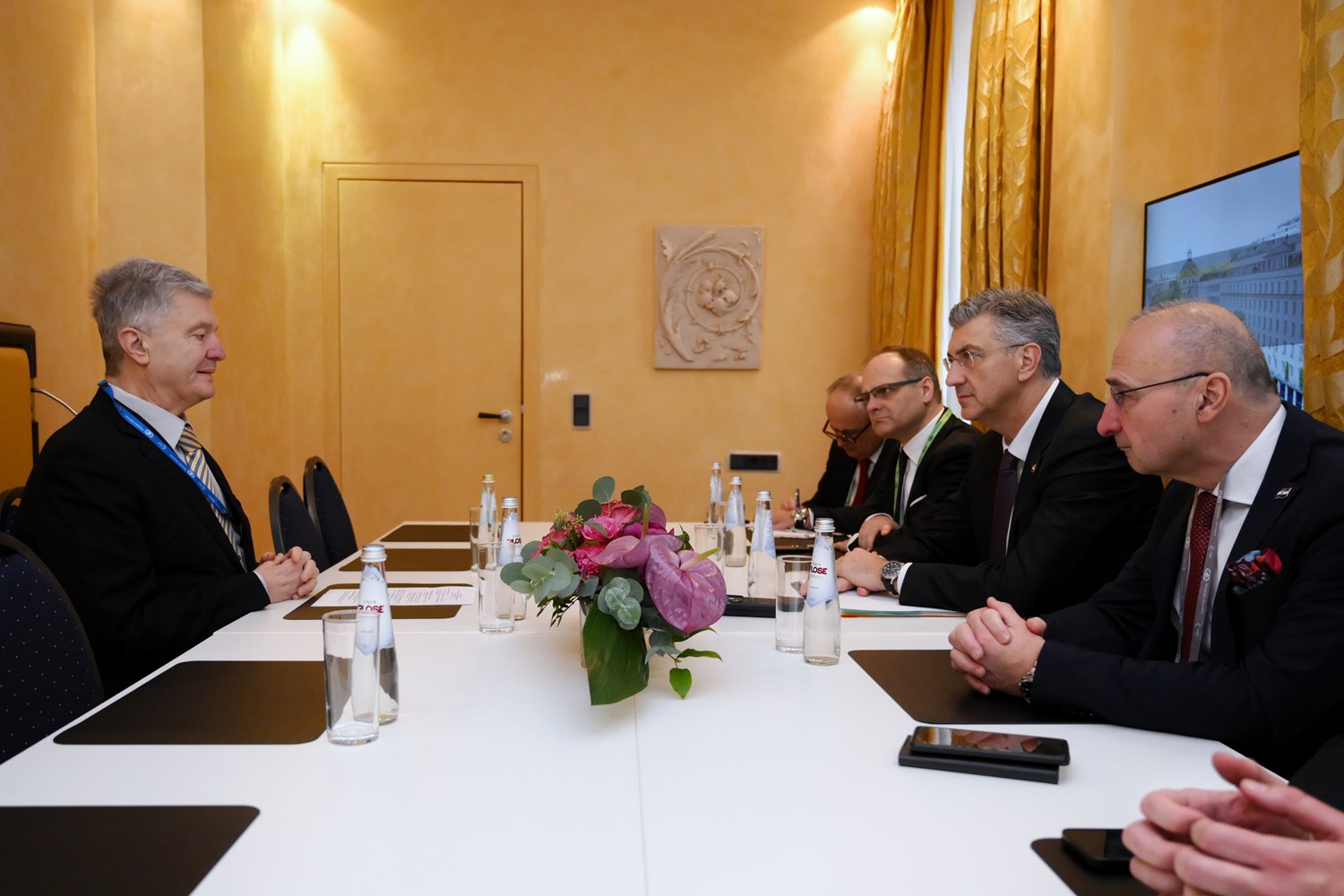
He also met with former President of Ukraine, Petro Poroshenko.
"Continuous attacks on the Ukrainian energy infrastructure and the civilian population show that Russia is not interested in peace. We will continue to provide comprehensive support to Ukraine and advocate for a peace plan that will end the war and protect the sovereignty of Ukraine," Prime Minister Plenković said.
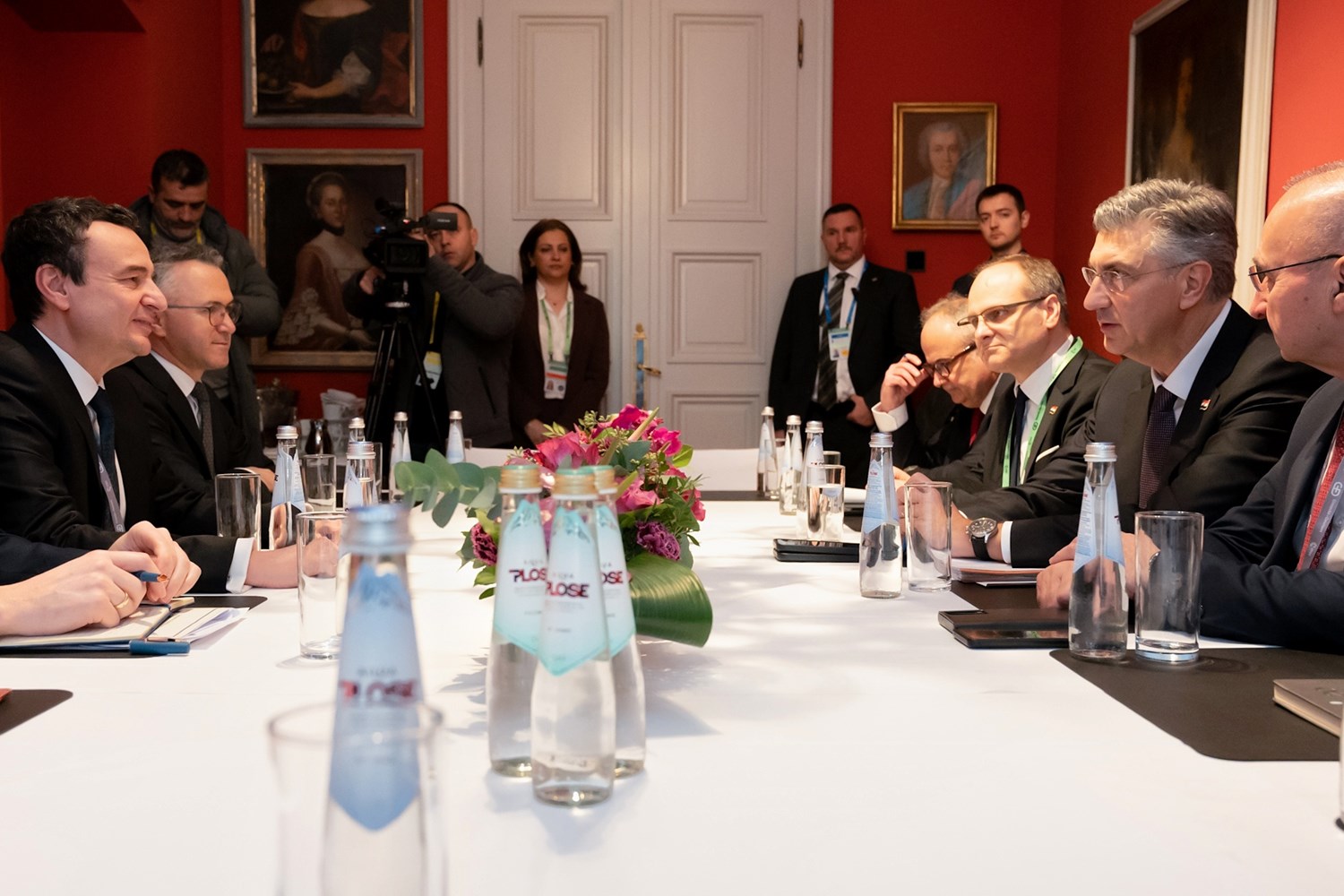
He congratulated Kosovo Prime Minister Albin Kurti on his re-election. They discussed the situation in the neighborhood, security challenges and the status of the Croatian minority in Janjevo.
"We continue to strengthen bilateral relations and support Kosovo's European path," said Prime Minister Plenković after the meeting.
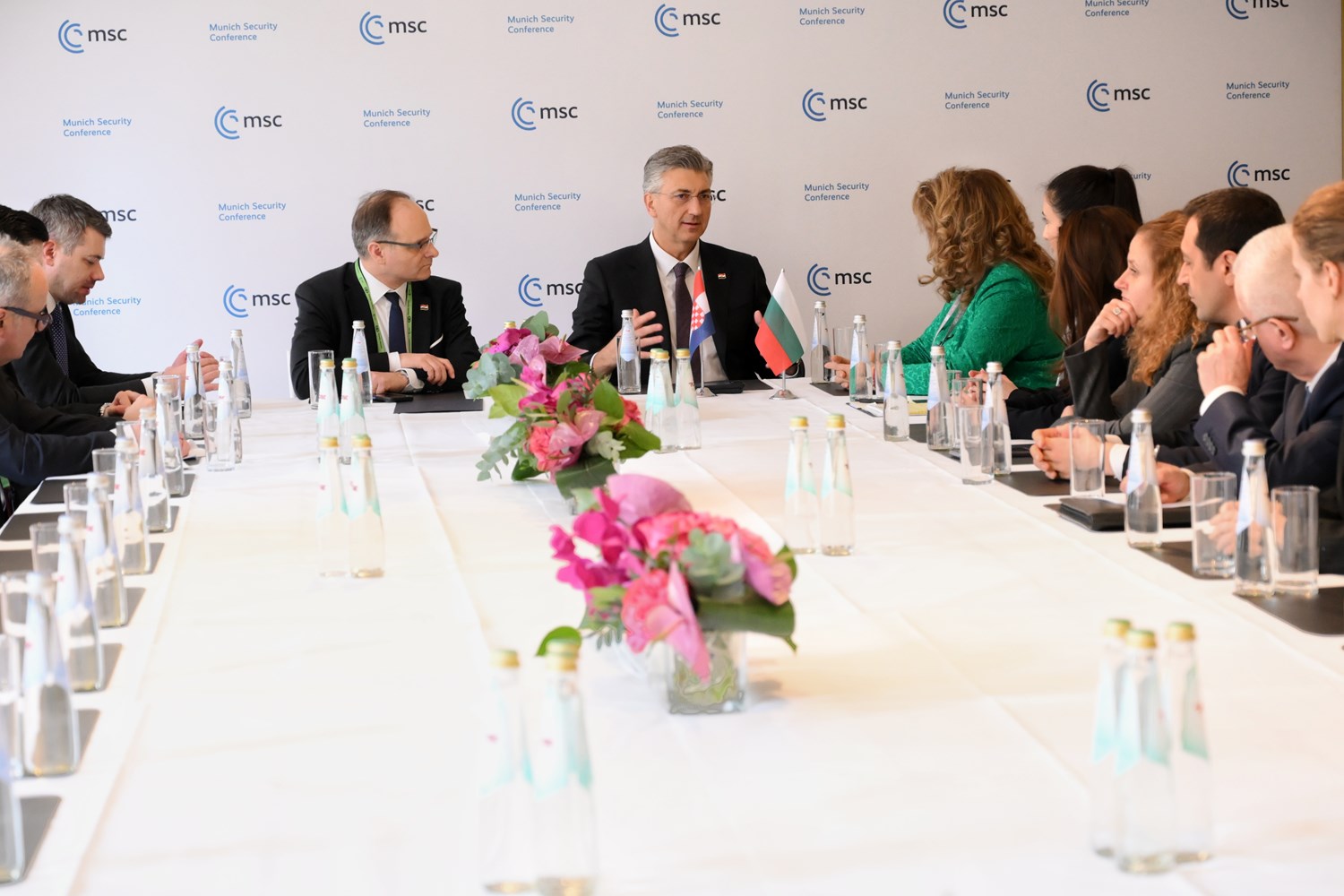
With Bulgarian President Iliana Iotova, he discussed bilateral relations, the priorities of the Croatian presidency of the Three Seas Initiative and the European Union's enlargement policy.
SUPPORTING UKRAINE
Ukraine has become a European shield, an innovative defense hub and an example of transformative resilience
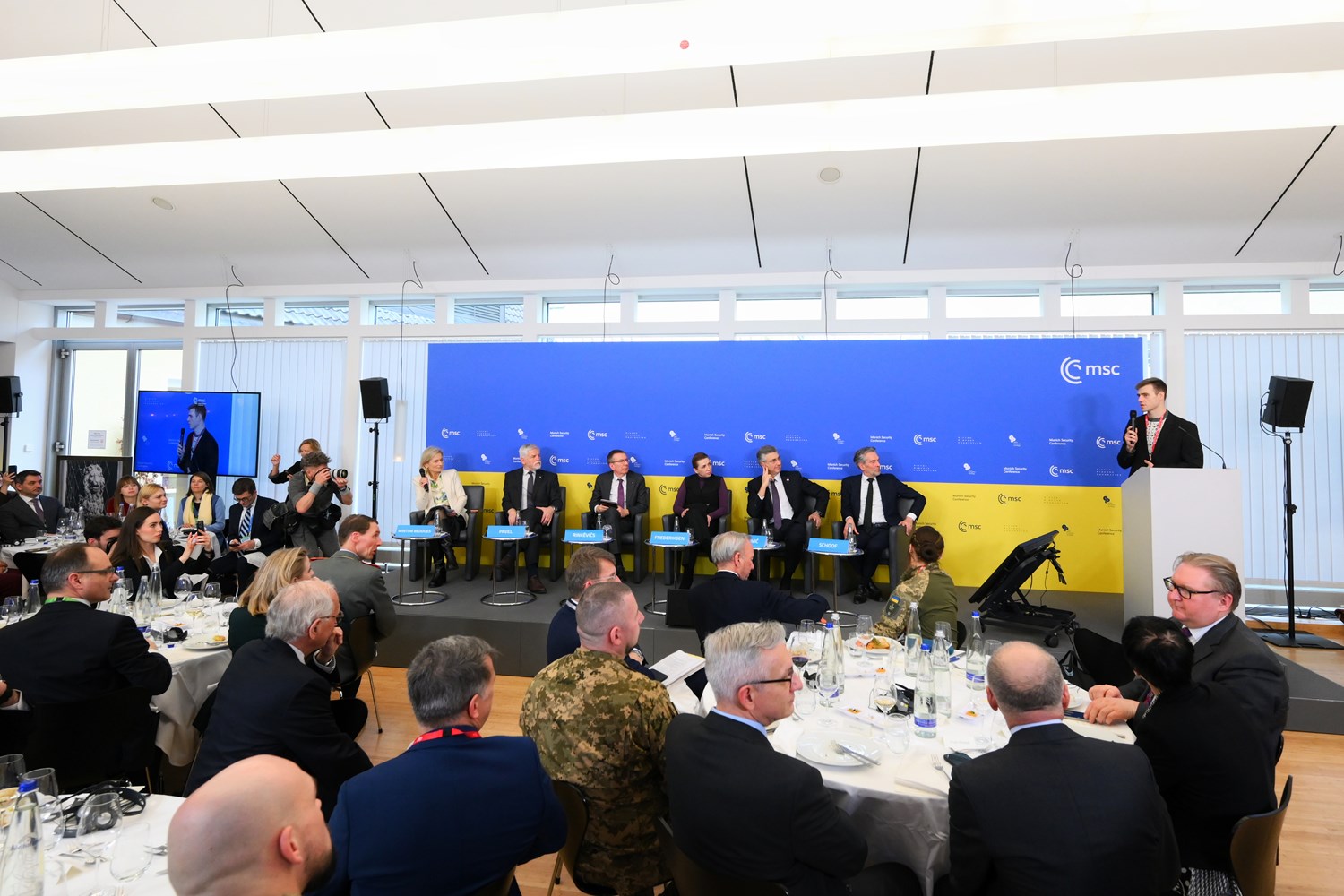
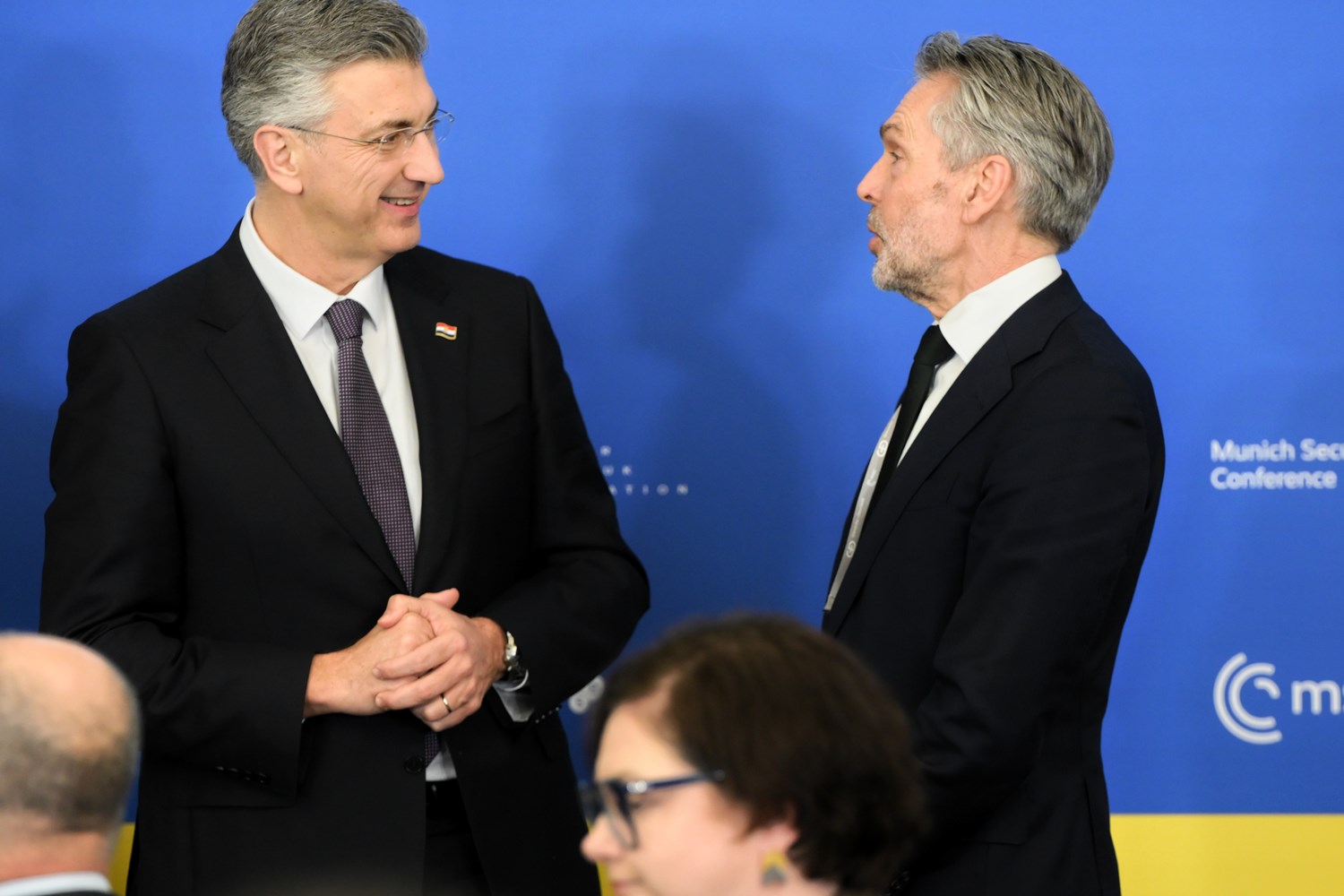
As part of the Munich Security Conference, Prime Minister Andrej Plenković participated today in the Ukrainian Lunch panel, on the topic "Ukraine - Our Nights Watch and the Futures Frontier".
- 14.02.2026.
- video
-
photo
Gallery
.jpg?preset=gallery-fullsize)
.JPG?preset=gallery-fullsize)
.jpg?preset=gallery-fullsize)


.jpg?preset=news-carousel-img)